

Mastering Quiet: A Buyer's Guide to Noise Reduction Through Window Upgrades and Personal Solutions
Discover the best products and methods to achieve peace, from insulating your home to personal 'noise cancelling' technology.
Are you searching for effective ways to silence the relentless din of traffic, construction, or a bustling household?
From structural home improvements to advanced personal devices, the right noise reduction solution is out there, waiting to bring you peace.
This guide empowers you to make an informed purchasing decision, transforming your environment into a haven of quiet.
In a world that seems to get louder by the day, the quest for effective noise reduction is more relevant than ever. Unwanted sound infiltration, whether from external sources like traffic and neighbors, or internal distractions, impacts our ability to concentrate, relax, and sleep well. While the term "noise cancelling" often conjures images of headphones, comprehensive quiet often requires a multi-faceted approach, starting with the very structure of our homes.
This deep-dive guide is crafted for the discerning buyer seeking practical and effective solutions. We will explore various methods for mitigating unwanted noise, with a dual focus on upgrading windows – often the weakest link in a home's sound insulation – and leveraging personal 'noise cancelling' technologies. You'll learn about their effectiveness, associated costs, and installation feasibility, providing you with the comprehensive information needed to evaluate options and make the best purchasing decision for a quieter, more peaceful environment.
Quick navigation
- The Persistent Problem of Unwanted Noise: Your Quest for Quiet
- Window Solutions: Blocking External Noise at the Source
- Beyond Windows: Personal 'Noise Cancelling' Devices & Other Home Solutions
- Comparing Your Options: Effectiveness, Cost, and Best Fit for Your Needs
- Making Your Choice: A Buyer's Guide to Noise Reduction
- What this means for you
- Risks, trade-offs, and blind spots
- Main points
The Persistent Problem of Unwanted Noise: Your Quest for Quiet
The constant bombardment of unwanted noise isn't just an annoyance; it's a significant stressor that can erode our quality of life. From the incessant hum of traffic and distant construction to the chatter of neighbors, external sounds infiltrate our personal spaces, disrupting sleep, impacting concentration, and affecting our overall well-being. This universal struggle for peace drives many to seek effective noise reduction solutions. But why does noise penetrate our homes so easily, and why is finding quiet such a challenge?
Sound, being a form of energy, travels through the air and solid materials, always seeking the path of least resistance. In a typical home, this path often leads directly through windows and doors, which are inherently less dense and have more potential for gaps than solid walls. Standard construction often prioritizes light and ventilation, inadvertently creating acoustic vulnerabilities. The perception of "noise cancelling" for an entire room seems like a futuristic concept, but the reality of modern sound insulation can achieve remarkable results. Is true quiet an unattainable luxury, or within reach with the right approach?
Common Sources of Unwanted Noise:
- Traffic: Cars, trucks, motorcycles, public transportation.
- Construction: Jackhammers, machinery, general site activity.
- Neighbors: Voices, music, pets, household appliances.
- Aircraft: Overhead planes, especially near airports.
- Weather: High winds, heavy rain, hail.

The quest for a tranquil home environment often involves understanding the physics of sound and identifying specific weak points in your living space. By addressing these vulnerabilities with targeted solutions, you can significantly reduce the impact of external noise, creating a calmer, more productive, and restorative environment. The first step is often to look at the most obvious acoustic culprits.
Window Solutions: Blocking External Noise at the Source
For most homes, windows are the primary point of entry for external noise. Addressing this vulnerability with targeted solutions can yield the most significant improvements in indoor quiet. What are the most effective window-specific noise reduction products and methods available to buyers?
1. Sealing and Weatherstripping (Low Cost, High Impact for Leaks)
The simplest and most immediate solution is to seal any gaps or cracks around your existing windows. Sound, like air, will exploit the path of least resistance. High-quality weatherstripping around operable sashes and acoustic caulk along the frame can dramatically reduce sound infiltration from air leaks. This is a foundational step that should always be considered before more expensive upgrades. A well-sealed window is the first line of defense. Remember that improving your home's envelope, from windows to roof replacement that might be covered by insurance, all contributes to a quieter, more efficient living space.
2. Heavy Curtains or Acoustic Drapes (Moderate Cost, Moderate Impact)
While not blocking sound at the source, heavy, multi-layered curtains or specialized acoustic drapes can significantly absorb sound waves once they've entered the room. These products help to dampen echoes and reduce overall perceived noise levels. They are an excellent supplementary solution, particularly effective in conjunction with other window treatments. Look for drapes made from dense, sound-absorbing fabrics and ensure they cover the entire window opening, extending past the frame.
3. Interior Storm Windows or Secondary Glazing (Moderate to High Cost, High Impact)
These systems involve installing a secondary window frame and pane on the interior side of your existing window. This creates an additional air gap, which is crucial for sound insulation. Many interior storm windows are custom-fitted and designed for acoustic performance, offering a significant improvement in Sound Transmission Class (STC) ratings without replacing your original windows. They are a popular choice for historical homes or those seeking a less invasive upgrade.
4. Laminated Glass Replacement (High Cost, Very High Impact)
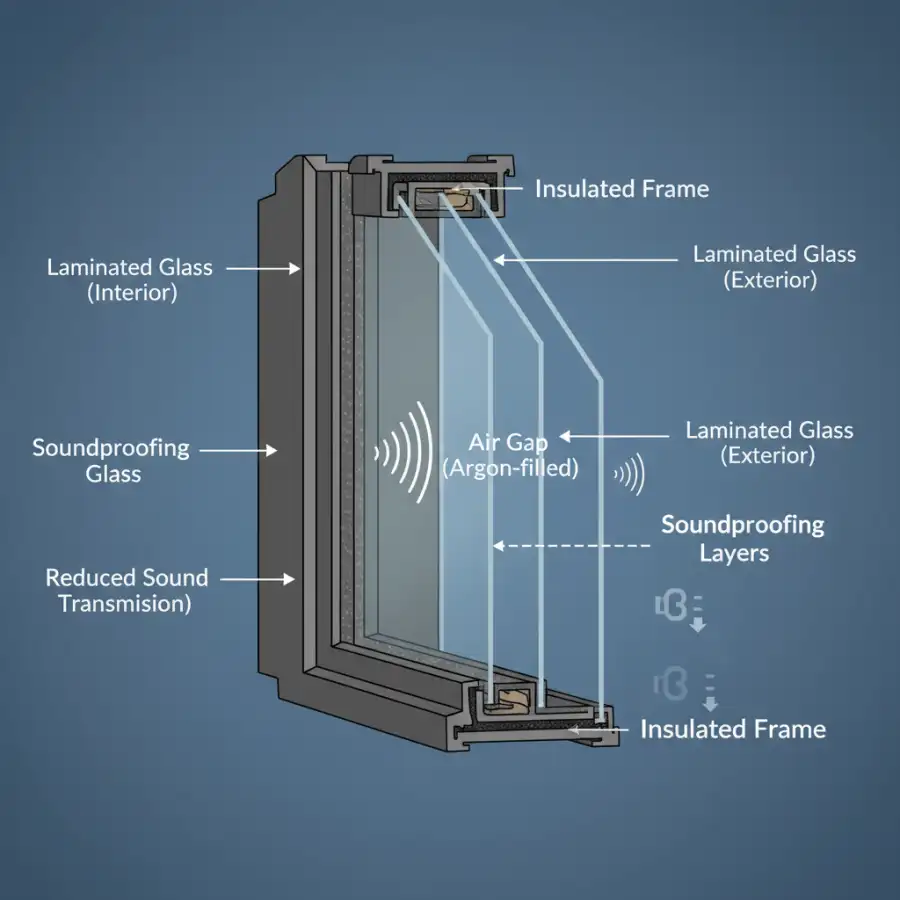
If you're replacing the glass in your existing window frames (or getting new windows), consider laminated glass. This consists of two panes of glass bonded together with a polyvinyl butyral (PVB) interlayer. This interlayer acts as a damping material, absorbing sound vibrations and preventing them from passing through. Laminated glass offers superior sound insulation compared to standard double-pane glass and also provides enhanced security and UV protection.
5. Full Acoustic Window Replacement (Highest Cost, Maximum Impact)
For severe noise problems, a complete replacement with dedicated acoustic windows offers the ultimate solution. These windows are engineered from the ground up for sound reduction, often featuring:
- Varying Glass Thicknesses: Different pane thicknesses break up sound waves more effectively.
- Wide Air Gaps: Larger spaces between panes filled with inert gases (argon, krypton).
- Laminated Glass: Often included as one or both panes.
- Heavy-Duty Frames: Designed to minimize vibration transmission.
Acoustic windows can achieve STC ratings in the mid-30s to mid-40s, providing dramatic noise reduction. This is a significant investment but delivers unparalleled quiet for homes exposed to extreme noise pollution. Is the premium worth the profound peace?
Beyond Windows: Personal 'Noise Cancelling' Devices & Other Home Solutions
While addressing windows is paramount for whole-home noise reduction, sometimes the issue is more localized or requires immediate, portable solutions. This is where personal 'noise cancelling' devices and other strategic home improvements come into play. What options exist to create pockets of quiet or to supplement your window upgrades?
Active Noise Cancelling (ANC) Headphones and Earbuds
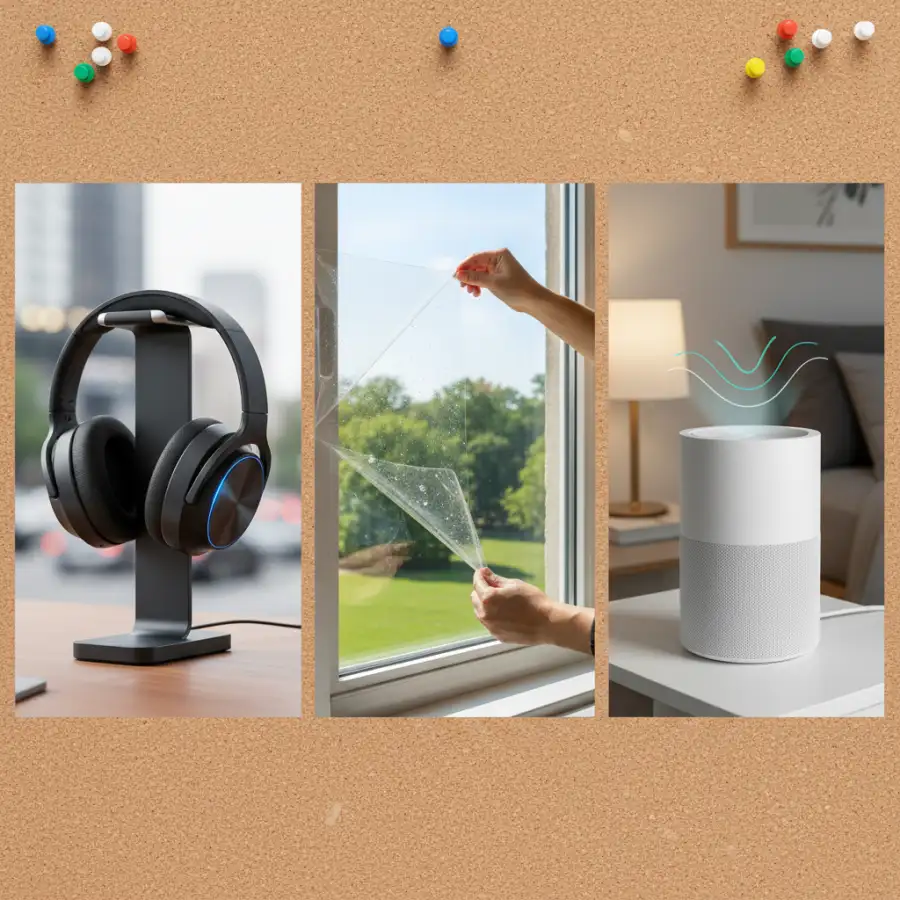
For immediate, personal quiet, ANC headphones and earbuds are invaluable. These devices work by generating an anti-phase sound wave that actively cancels out incoming low-frequency noise. They are incredibly effective for reducing constant hums (like airplane engines, bus rumble, or HVAC systems) and are perfect for creating a personal oasis in a noisy environment. While they won't soundproof your entire house, they are an excellent solution for work, travel, or focused relaxation. Consider top brands like Bose, Sony, and Apple for reliable performance.
How does Active Noise Cancellation (ANC) actually work?
ANC technology uses tiny microphones to pick up ambient noise. It then generates an inverse sound wave, exactly out of phase with the incoming noise. When these two waves meet, they cancel each other out, significantly reducing the perceived volume of low-frequency sounds. This process happens in real-time, providing an impressive quiet experience, especially for continuous hums and drones.
Other Home-Based Noise Reduction Strategies
A truly quiet home often means looking beyond just windows and personal devices:
- Soundproof Doors: Upgrading exterior and interior doors to solid-core models with tight seals (weatherstripping, door sweeps) can prevent significant sound leakage.
- Insulated Walls and Ceilings: For severe noise, adding acoustic insulation (like mineral wool) or an extra layer of drywall, often with resilient channels, can vastly improve sound transmission ratings.
- Soft Furnishings: Carpets, thick rugs, upholstered furniture, and wall hangings help absorb sound within a room, reducing echo and overall noise reverberation.
- Acoustic Panels: Designed specifically to absorb sound, these can be installed on walls or ceilings in particularly noisy rooms.
These supplementary methods create a more holistically soundproof environment, complementing window upgrades for maximum effect. Embracing comprehensive home improvements, like considering eco-friendly roofing, can also contribute to overall thermal and acoustic insulation, enhancing comfort throughout your living space.
Comparing Your Options: Effectiveness, Cost, and Best Fit for Your Needs
Choosing the best noise reduction solution involves a careful comparison of effectiveness, cost, and suitability for your specific environment and noise problem. There's no one-size-fits-all answer, so understanding the trade-offs is crucial. How do you weigh the various options to find your ideal fit?
Evaluating Effectiveness (STC vs. dB Reduction)
For architectural elements like windows, effectiveness is measured by the Sound Transmission Class (STC) rating. A higher STC means better sound insulation. A 3-point increase is noticeable, a 5-point increase is significant, and a 10-point increase is perceived as a halving of noise. For personal devices like ANC headphones, effectiveness is often described in terms of decibel (dB) reduction, indicating how much ambient noise they can cancel out. Assess the severity of your noise problem to determine the STC or dB reduction you truly need.
Cost Spectrum and ROI
The cost varies dramatically, from under $100 for DIY sealing to several thousands per window for full acoustic replacements. Personal ANC devices typically range from $150 to $500. Consider the return on investment: while more expensive, a full window replacement offers permanent, whole-room quiet and increased property value. ANC headphones, while temporary, offer portable, immediate relief. Your budget and long-term goals should guide your spending. To put these costs into perspective, you might compare them to other significant home investments, such as calculating the roof replacement cost per square, to see where noise reduction fits into your overall home improvement budget.
| Solution Type | Effectiveness (Noise Reduction) | Typical Cost Range | Application | Key Benefit |
|---|---|---|---|---|
| Window Sealing/Weatherstripping | Low-Moderate (2-5 STC) | $10 - $100 (DIY) | Home (existing windows) | Most affordable, addresses air leaks. |
| Heavy Drapes/Acoustic Curtains | Moderate (3-8 STC) | $50 - $500+ | Home (existing windows) | Acoustic absorption, aesthetic appeal. |
| Interior Storm Windows/Inserts | High (8-15 STC) | $200 - $800 per window | Home (existing windows) | Significant sound blocking without full replacement. |
| Laminated/Acoustic Window Replacement | Very High (15-25+ STC) | $800 - $2,000+ per window | Home (new construction/major renovation) | Maximum sound blocking, permanent, adds property value. |
| ANC Headphones/Earbuds | High (15-30 dB reduction) | $150 - $500 | Personal, portable | Instant, on-demand, private quiet. |
Installation Feasibility and Professionalism
DIY solutions are simple, but anything involving window modifications or replacements generally requires professional expertise. Improper installation can negate noise reduction benefits and lead to other problems like moisture intrusion. Always seek multiple quotes from licensed and insured contractors with a proven track record in acoustic installations. For ANC devices, simply buy and use. Which approach is more practical for your skill set and timeline?
Making Your Choice: A Buyer's Guide to Noise Reduction
Navigating the array of noise reduction solutions can be daunting, but with a clear understanding of your needs and the available options, you can confidently make a purchasing decision. This buyer's guide provides actionable steps to ensure you choose the best product or method to mitigate unwanted noise in your environment.
1. Pinpoint Your Noise Problem
Before buying anything, precisely identify the source and type of noise. Is it low-frequency rumble (traffic, HVAC)? High-frequency chatter (voices, dogs)? Is it constant or intermittent? Does it come from a specific direction? A simple sound meter app on your phone can give you a baseline decibel reading. Knowing your enemy helps you choose the right weapon.
2. Define Your Budget and Desired Outcome
How much are you willing to spend, and what level of quiet do you realistically expect? For minor annoyances and tight budgets, DIY sealing or heavy drapes might suffice. For significant relief and a mid-range budget, interior storm windows or good ANC headphones are excellent. For maximum peace, prepare for the investment of full acoustic window replacement. Be clear about your goals and financial limits.
Seek Multiple Professional Quotes: For any window-related upgrade, always get at least three detailed quotes from different licensed and insured contractors. Compare not just the price, but the proposed STC ratings, materials, installation warranty, and project timeline. Ask for references and check their reviews.
3. Consider Installation and Long-Term Commitment
Are you a DIY enthusiast, or do you prefer professional installation? Simple solutions are often DIY-friendly. Window inserts can be self-installed or professional. Full window replacement is almost always a job for experienced professionals due to complexity and the need to maintain structural integrity and energy efficiency. Consider if you're looking for a temporary fix or a permanent home upgrade that adds lasting value.
4. Read Reviews and Understand Warranties
For any product, from acoustic curtains to ANC headphones, scour user reviews for real-world performance feedback. For window products, thoroughly understand the manufacturer's warranty on the windows themselves and your installer's warranty on their labor. A strong warranty is a sign of product quality and installer confidence.
What this means for you
Making a conscious decision to invest in noise reduction solutions can dramatically improve your living environment and overall well-being. What's the ultimate impact of choosing the right product or method for your specific needs?
For individuals, effective noise reduction means more restful sleep, improved concentration for work or study, and a greater sense of calm and relaxation at home. Imagine being able to read a book in peace, hold a conversation without raising your voice, or simply enjoy the quiet without the intrusion of external sounds. These benefits extend beyond mere comfort, contributing to better health outcomes and increased daily productivity.
Invest in Your Well-being: Noise reduction isn't just about silence; it's an investment in your mental and physical health. By mitigating unwanted sound, you create a more restorative environment that supports focus, relaxation, and ultimately, a better quality of life. This proactive step helps you reclaim control over your personal space.
For homeowners, particularly, window-related noise reduction solutions also represent a tangible upgrade to property value. Energy-efficient, sound-insulating windows are highly sought after, increasing your home's appeal and potentially its market price. The initial investment pays off not only in immediate comfort but also in long-term financial benefits. It’s about creating a better home, one that supports your lifestyle and stands strong against external disturbances.
Risks, trade-offs, and blind spots
While the benefits of noise reduction are clear, it's essential for buyers to be aware of the potential risks, inherent trade-offs, and common blind spots that can arise when choosing and implementing solutions. What pitfalls should you carefully navigate to ensure a successful outcome?
Overpromising and Under-delivering: Some products or contractors might exaggerate the level of noise reduction achievable. Be wary of claims of "total silence" or unrealistic STC improvements without concrete data. Misinformation can lead to buyer's remorse and wasted money. Always seek verifiable specifications and realistic expectations.
A significant trade-off with some window-based solutions is the potential impact on natural light or ventilation. For instance, very thick, multi-pane windows, while excellent for sound, might reduce the amount of light that enters a room or limit how widely a window can be opened. You must balance the desire for quiet with other important aspects of your home environment. Are you willing to compromise on some natural airflow for profound quiet?
Another common blind spot is failing to consider all noise pathways. Focusing solely on windows while ignoring gaps around doors, thin interior walls, or even poorly insulated attics can lead to disappointing results. Sound is persistent, and it will exploit the next weakest link. A holistic assessment of your home's acoustic vulnerabilities is crucial to avoid this pitfall. This broader view of home improvement is similar to understanding eco-friendly roofing options, where the entire system contributes to efficiency.
Finally, the temptation to choose the cheapest option without considering long-term performance or installation quality is a risk. A poorly installed window, regardless of its STC rating, will not perform as expected. Similarly, low-cost ANC headphones might offer insufficient noise cancellation or poor audio quality. Prioritize value, which encompasses product quality, effectiveness, and professional installation, over simply the lowest price point.
Main points
Achieving effective noise reduction involves a strategic buying process, whether you're upgrading windows or choosing personal devices. Here are the key takeaways for making informed decisions:
- Identify Your Noise Source: Understand the type, source, and severity of your unwanted noise to select the most appropriate solution.
- Window Upgrades are Critical: Windows are often the weakest point; consider sealing, acoustic drapes, interior storm windows, or full acoustic window replacements for maximum impact.
- Personal ANC for Portable Quiet: Active Noise Cancelling headphones or earbuds offer effective, immediate, and portable solutions for personal quiet, especially against low-frequency hums.
- Compare Effectiveness & Cost: Evaluate solutions based on STC ratings (for windows) or dB reduction (for ANC), balancing desired quietness with your budget and long-term goals.
- Prioritize Professional Installation: For significant window upgrades, always hire licensed, insured, and experienced contractors specializing in acoustic installations to ensure optimal performance.
- Holistic Approach: Don't overlook other noise pathways like doors, walls, and structural gaps. A comprehensive strategy leads to the best results.
- Value Over Low Price: Focus on product quality, proven effectiveness, and reliable warranties rather than just the lowest cost, to avoid disappointment and ensure lasting quiet.
By diligently assessing your needs and carefully choosing from the range of available noise reduction solutions, you can confidently invest in products and methods that will bring a profound sense of peace and quiet to your home and personal life.