

The True Cost of a New Roof: Uncovering the Hidden Expenses of Replacing Your Home's Crown
A Detailed Guide to Budgeting, Selecting Contractors, and Financing Your Roof Replacement
A new roof isn't just about shingles; it's a significant investment with layered costs that often surprise homeowners. Are you prepared for every expense?
Beyond the obvious materials and labor, hidden factors can dramatically inflate your roof replacement budget. How do you protect yourself from unexpected financial surprises?
From choosing the right contractor to securing financing, understanding the full scope of a roof project is crucial. What vital information are you missing that could save you thousands?
Your roof stands as your home's primary shield against the elements, a critical component protecting your family and your most valuable asset. Eventually, however, even the most robust roof reaches the end of its lifespan, necessitating a replacement. The phrase "roof replacement cost" often brings to mind images of materials and labor, but the reality is far more intricate. For many homeowners, especially those facing a significant project like replacing a 2,000 sq. ft. roof, the initial estimate can be just the tip of a much larger financial iceberg.
This comprehensive guide explains the complete cost breakdown of a roof replacement, moving beyond the surface to reveal the often-overlooked hidden costs. We'll provide estimated figures for a typical 2,000 sq. ft. roof, detail the most expensive components, and equip you with the knowledge to evaluate and select a trustworthy roofer. Furthermore, we'll explore various financing options to make this essential home improvement project manageable. By understanding every facet of the investment, you can approach your roof replacement with confidence, ensuring a sound decision that protects your home for decades to come.
Quick navigation
- Beyond the Shingles: Deconstructing the Cost of a 2,000 Sq. Ft. Roof Replacement
- The Unseen Variables: Uncovering the Hidden Costs of Replacing Your Roof
- Choosing Your Partner: How to Evaluate and Select a Trustworthy Roofing Contractor
- Funding Your Future: Navigating Financing Options for Your New Roof
- What this means for you
- Risks, trade-offs, and blind spots
- Main points
Beyond the Shingles: Deconstructing the Cost of a 2,000 Sq. Ft. Roof Replacement
When you first consider a roof replacement, your natural thought goes toward the cost of the visible materials and the labor to install them. However, understanding the true cost, particularly for a common size like a 2,000 sq. ft. roof, requires a closer look into how these projects are priced and the various influencing factors. A 2,000 sq. ft. roof translates to 20 "squares" in roofing terminology (one square equals 100 sq. ft.), a common benchmark for project estimation.
The **base cost** of replacing a 2,000 sq. ft. roof can vary significantly depending on the material chosen. For **asphalt shingles**, which are the most common and economical choice, you might expect to pay anywhere from $8,000 to $18,000. Opting for **metal roofing** can increase costs to $16,000 to $30,000, offering superior durability and longevity. For premium materials like **tile (clay or concrete)** or **slate**, the costs can significantly increase to $20,000 to $60,000+, reflecting their intricate installation and extended lifespans. These figures encompass both materials and labor under ideal conditions.
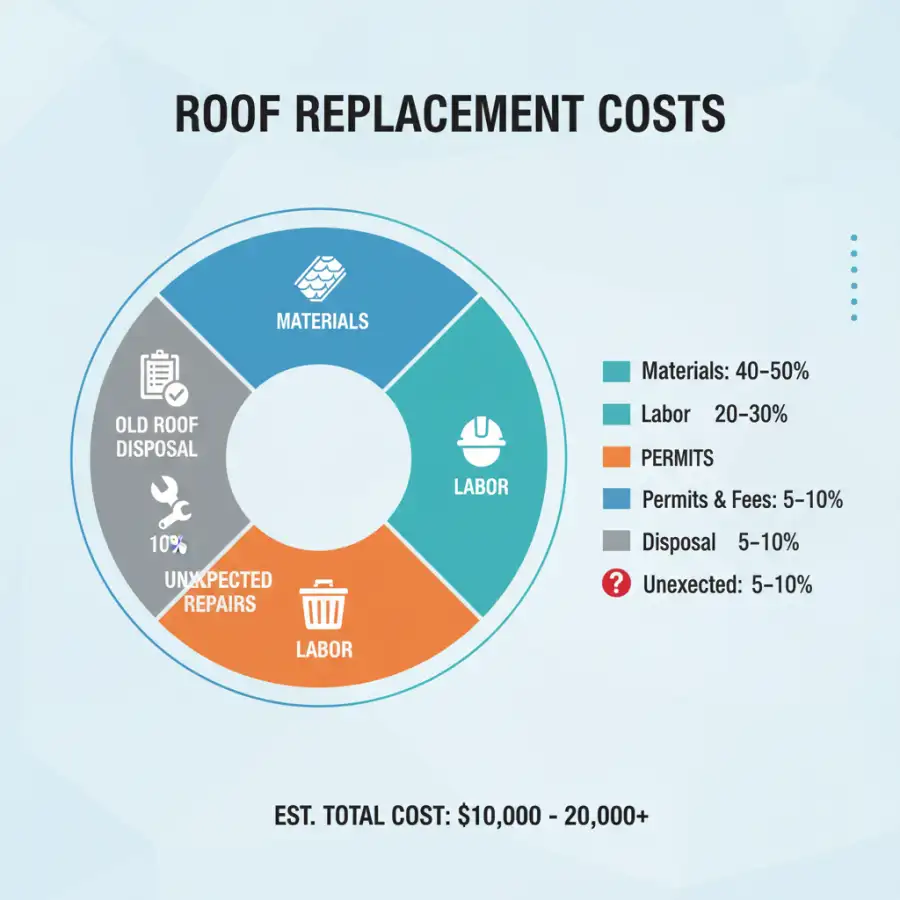
Breaking down these costs, the **materials** themselves (shingles, underlayment, flashing, nails, etc.) typically account for 30-50% of the total. **Labor** costs, covering the tear-off of the old roof, installation of the new one, and site cleanup, usually make up 40-60%. Additionally, you must include **permits and inspections**, which are local government requirements to ensure safety and code compliance, typically ranging from a few hundred to over a thousand dollars depending on your municipality. Finally, **waste disposal** for the old roofing materials, including landfill fees, adds another few hundred to a thousand dollars. These are the upfront, visible components that form the core of your budget.
However, these are merely averages. The **complexity of your roof** (steep pitch, multiple angles, dormers, skylights), ease of **access** to the site, and even your **geographic location** can all affect these numbers. A steeply pitched roof, for instance, requires more labor and specialized safety equipment, increasing costs. Is the price per square foot truly the only number that matters when you're considering a roof that might last for decades?
The Unseen Variables: Uncovering the Hidden Costs of Replacing Your Roof
The sticker price for a roof replacement rarely tells the whole story. Beyond the primary components of materials and labor, many "hidden costs" can appear, often discovered only during the tear-off process. Ignoring these potential expenses is a common oversight for homeowners and can lead to significant budget overruns if not accounted for with a contingency fund.
- Structural Repairs and Decking Replacement: This is perhaps the most frequent and potentially expensive hidden cost. Once the old roofing is removed, water-damaged or rotted plywood decking, fascia boards, or even underlying rafters might be exposed. If the decking is compromised, it must be replaced to ensure the structural integrity of your new roof, adding costs for both materials (plywood sheets) and additional labor. These unexpected repairs can quickly add thousands to your bill.
- Flashing and Ventilation Upgrades: While some flashing (metal seals around chimneys, vents, skylights) may be salvageable, it's often wise to replace it entirely during a new roof installation to prevent future leaks. Similarly, proper attic ventilation is crucial for your roof's longevity and your home's energy efficiency. If your current ventilation system is inadequate (e.g., insufficient soffit and ridge vents), upgrading it is a smart investment that adds to the total cost but prevents future problems.
- Chimney and Skylight Work: These penetrations in your roof are common sources of leaks. A full roof replacement is the ideal time to inspect and address any issues with chimney mortar, flashing, or to replace old, inefficient skylights. While not strictly part of the roofing, these related repairs are often necessary concurrently.
- Water Damage Remediation (Interior): If your old roof was leaking, there might be interior water damage to ceilings, insulation, or drywall. While a roofer might not directly fix these, the cost to repair them should be part of your overall budget consideration, especially if not covered by homeowners insurance.
- Specialized Equipment and Accessibility Challenges: If your roof is exceptionally high, steep, or difficult to access, contractors may need specialized equipment like cranes or additional safety gear, which can incur extra charges. Likewise, if landscaping or other obstacles need to be protected or temporarily moved, this can add to the labor cost.
- Unforeseen Hauling Fees: While disposal is typically included, if your old roof had multiple layers of shingles, or if there's an unusually large amount of debris, extra hauling fees might apply.
To reduce these surprises, it is always wise to budget for a **contingency fund** of 10-20% above the initial quote. This financial cushion can absorb unexpected expenses without disrupting your project. What lurking issues could turn a seemingly straightforward replacement into a costly renovation?
Choosing Your Partner: How to Evaluate and Select a Trustworthy Roofing Contractor
The quality of your roof replacement ultimately depends on the expertise and integrity of your chosen roofing contractor. Selecting the right professional is a critical step that can save you significant money and headaches in the long run. This process requires diligence and attention to detail.
- Verify Licenses and Insurance: This is non-negotiable. Ensure the contractor holds a valid state-issued contractor's license (if required in your area) and, crucially, carries both **general liability insurance** and **worker's compensation insurance**. General liability protects your property from damage, while worker's comp covers their crew in case of injury on your property. Requesting proof of these documents is a standard and necessary step. Never work with an uninsured contractor. For a deeper understanding of selecting a reliable partner, consider reviewing resources on choosing a reputable roofing company.
- Check Experience and References: Look for contractors with a proven track record, especially in your local area. How long have they been in business? Do they specialize in residential roofing? Ask for a list of recent projects you can drive by and, if possible, contact past clients for references. Inquire about their satisfaction with the work, communication, and adherence to timelines.
- Request Detailed, Itemized Bids: Never accept a simple lump-sum quote. A reputable contractor will provide a comprehensive, itemized bid that clearly breaks down costs for:
- Materials (type, brand, quantity)
- Labor (tear-off, installation)
- Permits and inspection fees
- Waste disposal
- Any contingency for unforeseen repairs (clearly stated)
- Understand Warranties: Distinguish between material warranties (from the manufacturer) and labor warranties (from the contractor). A strong material warranty (e.g., 25-50 years for quality asphalt shingles) is important, but a solid labor warranty (typically 5-10 years, some offer longer) from the installer provides peace of mind against installation defects.
- Evaluate Communication and Professionalism: Pay attention to how responsive, clear, and professional the contractor is during the quoting process. Are they willing to answer all your questions? Do they provide clear explanations? Good communication is a hallmark of a reliable professional.
- Read Online Reviews: Consult platforms like the Better Business Bureau (BBB), Google Reviews, Yelp, and local community forums. Look for consistent patterns in feedback, both positive and negative, regarding quality, timeliness, and customer service.
Obtaining at least three quotes from different, thoroughly vetted contractors is a wise strategy. This allows you to compare not just price, but also expertise, proposed materials, and overall professionalism. How can you distinguish a true professional from a casual operator in such a crucial home project?

Funding Your Future: Navigating Financing Options for Your New Roof
A roof replacement is a significant investment, often ranging from several thousand to tens of thousands of dollars. While some homeowners can afford to pay cash, many require financing to make this essential home improvement a reality. Understanding your options is key to choosing the most suitable and financially sound path.
- Cash Payment: If you have sufficient liquid savings, paying cash is typically the most cost-effective option, as it avoids interest payments and loan fees. This is often the ideal choice if your emergency fund remains intact post-payment.
- Home Equity Loan or HELOC (Home Equity Line of Credit): These options allow you to borrow against the equity you've built in your home. Home equity loans offer a lump sum with a fixed interest rate, while HELOCs provide a revolving credit line. They often have lower interest rates than personal loans because your home serves as collateral, but they do put your home at risk if you default.
- FHA Title I Loans: These government-backed loans are specifically designed for home improvements, including roof replacement. They can be a good option for those with less equity or lower credit scores, as they are insured by the Federal Housing Administration. Limits typically apply, and they may require your lender to be FHA-approved.
- Contractor Financing: Many roofing companies partner with third-party lenders to offer financing options. These can be convenient, sometimes offering promotional rates (like 0% APR for a limited period). However, it's crucial to compare these rates and terms carefully with other financing avenues, as interest rates can be higher after promotional periods expire.
- Personal Loans: Unsecured personal loans can be obtained from banks, credit unions, or online lenders. They don't require collateral, but interest rates are generally higher than secured loans (like home equity loans), and terms are typically shorter. This option is best for those with excellent credit scores.
- Homeowners Insurance Claim: If your roof damage is due to a sudden, covered event like a storm (hail, high winds), your homeowners insurance might cover a significant portion, or even all, of the replacement cost. It's crucial to file a claim promptly and work with your insurer and a reputable roofing contractor who can assist with the claims process. Additionally, choosing an eco-friendly roofing solution might qualify for specific rebates or incentives.
- Energy Efficiency Rebates and Tax Credits: Depending on your location and the type of roofing materials chosen (e.g., cool roofs, certain metal roofs), you might qualify for local or federal tax credits or rebates designed to encourage energy-efficient home improvements. Research these opportunities thoroughly.
Each financing option has its own pros and cons regarding interest rates, repayment terms, and eligibility requirements. Carefully evaluate your financial situation and compare offers before committing. With so many options, what’s the smartest financial path to take for your roof replacement?
What this means for you
Starting a roof replacement project, particularly for a significant area like 2,000 sq. ft., can feel daunting. However, armed with the knowledge from this guide, you are no longer a passive recipient of quotes but an empowered decision-maker. This comprehensive understanding translates into clear benefits for you and your home.
Firstly, it means **greater budgeting confidence**. By anticipating not just the visible costs of materials and labor, but also the often-hidden expenses of structural repairs, permits, and proper ventilation, you can create a realistic and robust budget. This proactive approach reduces the likelihood of unpleasant financial surprises mid-project, allowing you to plan effectively and maintain control over your finances. No more sticker shock when an unexpected decking repair is needed; you’ve already accounted for it.
Secondly, it equips you to **select a truly superior contractor**. You now know precisely what questions to ask, what credentials to verify, and what red flags to avoid. This discernment ensures you partner with a reputable, licensed, and insured professional who will deliver quality workmanship and reliable warranties. The longevity and performance of your new roof directly depend on this choice, and your informed decision-making secures a high-quality installation that protects your home for decades.
Finally, understanding the array of **financing options** means you can fund your roof replacement without undue financial strain. Whether it's using home equity, exploring FHA loans, or carefully assessing contractor financing, you can choose a path that aligns with your personal financial health. This financial flexibility ensures that an essential home improvement project, vital for structural integrity and property value, is accessible and manageable. In essence, this guide turns a potentially stressful process into a well-managed investment, safeguarding your home and your peace of mind. How will this comprehensive understanding fundamentally change your approach to large-scale home renovations?
Risks, trade-offs, and blind spots
While an informed approach to roof replacement significantly reduces risks, it's equally important to acknowledge the built-in trade-offs and common oversights that can still challenge even the most prepared homeowner. Acknowledging these potential pitfalls ensures a realistic and practical approach to your project.
- The Attraction of the Low-Ball Bid: One of the most dangerous oversights is giving in to a significantly lower quote without proper scrutiny. A dramatically cheaper price often comes with trade-offs: inferior materials, unlicensed labor, inadequate insurance, or a lack of warranty. The risk of sacrificing quality for an upfront saving is high, often leading to costly repairs and premature roof failure later on.
- DIY Temptation (Partial or Full): While tempting to save on labor, attempting a full or even partial DIY roof replacement carries substantial risks. Safety is paramount; falls from roofs are a leading cause of construction injuries. Furthermore, improper installation can void material warranties, lead to leaks, and ultimately cost more in professional remediation than originally saved. This trade-off often isn't worth the risk.
- Ignoring Ventilation and Insulation: A common oversight is focusing solely on the roofing material itself while neglecting the attic's ventilation and insulation. Poor attic ventilation can trap heat, prematurely degrading your new roof and increasing energy bills. Ignoring this can lead to a shorter lifespan for your expensive new roof and higher long-term operating costs.
- Incomplete Contract Review: Rushing through or failing to fully understand the contract is a significant oversight. Look for unclear scopes of work, vague payment schedules, lack of warranty details, or clauses that favor the contractor too heavily. A poorly defined contract can lead to disputes, additional charges, and dissatisfaction.
- Underestimating Contingency: While budgeting for a contingency is advised, underestimating its size for particularly old or complex roofs is a risk. If significant decking rot or structural issues are discovered, a small contingency might not be enough, forcing difficult financial decisions mid-project.
- Permit and Code Violations: Failing to secure proper permits or working with a contractor who cuts corners on local building codes can lead to legal issues, fines, and the potential requirement to tear down and redo work. This is a critical regulatory oversight that can have severe consequences for your home's legality and safety.
By staying vigilant against these risks and trade-offs, and ensuring every aspect of the project adheres to best practices, you can safeguard your investment and your home. What seemingly small oversight could grow into a major headache and unexpected expense later on?
Main points
Replacing your roof is a substantial investment that requires careful planning and informed decision-making. Here are the main takeaways to guide you:
- Comprehensive Cost Breakdown: A 2,000 sq. ft. roof replacement involves significant costs for materials (e.g., $8,000-$18,000 for asphalt), labor, permits, and waste disposal.
- Anticipate Hidden Costs: Budget for unexpected expenses like structural repairs (rotted decking), flashing/ventilation upgrades, and chimney/skylight work, often adding 10-20% to the total.
- Vet Your Contractor Thoroughly: Prioritize licensed, insured, and experienced roofers with strong references and transparent, itemized bids to ensure quality workmanship and reliable warranties.
- Explore Financing Options: Consider various financing solutions such as home equity loans, FHA Title I loans, contractor financing, or personal loans to manage the investment effectively.
- Empowerment Through Knowledge: Understanding every aspect of the project, from costs to contractor selection, empowers you to make confident decisions that protect your home and finances.
- Beware of Pitfalls: Avoid low-ball bids, DIY temptations, neglecting attic ventilation, and incomplete contract reviews, as these can lead to costly mistakes and future problems.
Your roof is more than just a cover; it's a vital component of your home's integrity and value. By approaching its replacement with a well-informed strategy, you're not just installing new shingles, but investing wisely in the long-term protection and peace of mind of your most cherished asset. Make your next roof replacement a result of smart planning.