

Understanding Roof Repair Cost: Your Comprehensive Guide to Fair Pricing and Smart Decisions
Decoding the Factors, Estimating Expenses, and Securing Quality Service for Your Home
A damaged roof can feel like a financial black hole, but understanding the true cost of roof repair transforms anxiety into informed action.
From a single loose shingle to widespread storm damage, every repair has its price. Are you equipped to accurately estimate expenses and ensure you're paying fairly?
Your roof protects everything you cherish. Learning to navigate repair costs ensures quality workmanship, safeguarding your home and your wallet for years to come.
Your home's roof stands as its primary shield against the relentless forces of nature, a critical barrier that safeguards your family and possessions. Yet, like all components of a house, roofs are susceptible to wear, tear, and unexpected damage from severe weather. When a problem arises, the phrase "roof repair cost" often conjures images of hidden expenses and daunting uncertainty. Many homeowners find themselves grappling with how to accurately estimate these costs, compare quotes effectively, and ultimately ensure they're receiving both quality service and fair pricing.
This comprehensive guide is designed to demystify the complexities surrounding the cost of roof repair. We will examine the many factors that influence pricing, from the specific type of damage and roofing materials involved to labor rates and geographical considerations. Our objective is to provide you with the essential knowledge to navigate the repair process confidently. By understanding what drives these costs, how to obtain transparent estimates, and what questions to ask prospective contractors, you can make informed financial decisions that protect your home without undue stress or financial strain.
Quick navigation
- Decoding Roof Repair Costs: The Influencing Factors
- Typical Costs by Damage Type and Material
- Getting Accurate Quotes: Your Guide to Transparency
- What this means for you
- Risks, trade-offs, and blind spots
- Repair vs. Replacement: Making the Right Call
- Saving Money Without Compromising Quality
- Main points
Decoding Roof Repair Costs: The Influencing Factors
The total cost of roof repair is rarely a straightforward number. Instead, it's a figure shaped by several key factors. Understanding these elements is the first step towards accurately estimating your expenses and avoiding sticker shock.
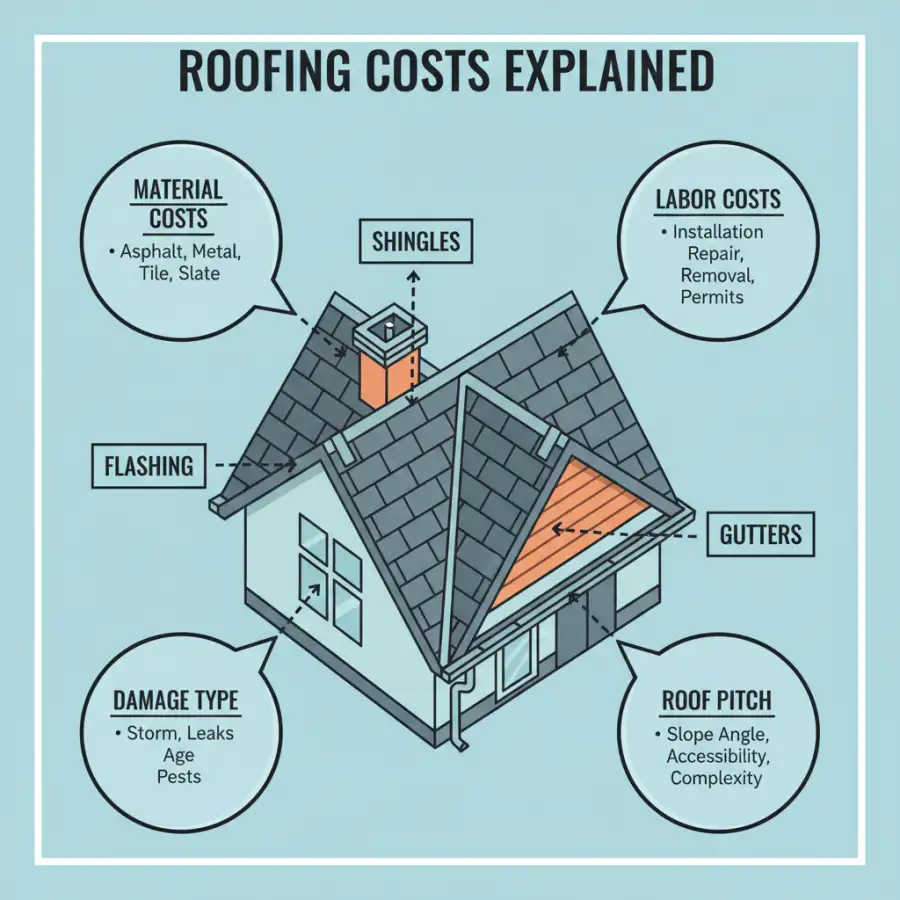
The type and severity of damage stand as the primary determinant. A minor leak stemming from a single dislodged shingle, for instance, will incur a significantly lower cost than extensive structural damage caused by a fallen tree or widespread hail impact. Isolated issues are generally quicker and less material-intensive to fix than broad areas of compromised roofing. Following closely is the type of roofing material. Asphalt shingles are typically the most common and, consequently, the most affordable to repair due to material availability and standard installation practices. More specialized materials such as metal, clay tile, slate, or synthetic options often command higher repair costs. These materials require specialized tools, techniques, and often, more expensive replacement components, influencing the overall cost of roof repair. For those who have invested in eco-friendly roofing solutions, the repair may also require specific expertise or sourcing unique materials, further impacting the price.
The complexity of your roof's design directly impacts labor. Steep pitches, multiple valleys, dormers, skylights, and chimney penetrations all add to the difficulty and time required for safe and effective repair. Easy access to the roof itself, or lack thereof, can also sway labor costs; scaffolding or specialized equipment for hard-to-reach areas will add to the bill. Geographical location also plays a crucial role. Labor rates, material costs, and even local permitting requirements vary widely from one city or state to another. Finally, seasonality and urgency can influence pricing. Emergency repairs after a major storm, or work undertaken during challenging weather conditions, may incur higher fees due to increased demand and logistical difficulties. Is a low bid always a bargain, or sometimes a red flag in disguise, particularly when considering the long-term integrity of your roof?
Typical Costs by Damage Type and Material
While the exact cost of roof repair will ultimately depend on local market rates and the specifics of your project, understanding typical price ranges for common issues and materials can provide a valuable framework for your budgeting. These figures are general estimates, but they offer a realistic picture of what homeowners can expect.
For minor leaks or small patching jobs, such as sealing a small hole or re-securing a loose piece of flashing, expect costs to range from $150 to $500. These are often quick interventions that prevent much larger problems down the line. If you have missing or damaged asphalt shingles, a very common repair, replacing a handful of shingles might cost between $200 and $600. For a larger area, for instance, a 10x10 foot section (a 'square' in roofing terminology), the price can rise to $500-$1,500, especially if underlying decking or underlayment has also been compromised. This demonstrates how even a single type of damage can have a broad cost spectrum.
Flashing repair around vulnerable areas like chimneys, vents, or skylights is essential for preventing water intrusion. Costs typically fall between $300 and $800, with more complex or custom flashing work potentially exceeding this. Gutter repair, often a precursor or consequence of roof issues, might range from $100-$300 for a simple reattachment, while replacing a damaged section could be $300-$800. Repairs to soffit and fascia, the components that protect your roof edges and attic, generally cost between $300 and $1,000 per section, depending on the extent of rot or physical damage. These often overlooked elements are critical to the overall health of your roof system and preventing further water damage.
The choice of roofing material significantly impacts repair costs. Asphalt shingles remain the most cost-effective. Metal roof repairs, for similar damage scope, typically range from $500 to $1,500 or more, owing to specialized materials and welding or sealing requirements. Tile or slate roof repairs are usually the most expensive, often starting at $500 and easily reaching several thousand dollars for even minor work. The delicate nature of these materials, coupled with the specialized skills needed for removal and precise replacement, drives up the labor component. Is addressing a small issue immediately a minor investment, or a significant financial safeguard against a catastrophic failure?

Getting Accurate Quotes: Your Guide to Transparency
Securing an accurate and transparent quote is perhaps the most critical step in managing the cost of roof repair. This process empowers you to make an informed decision, compare options fairly, and avoid the dreaded financial surprises that can plague home improvement projects. The absolute golden rule here is to obtain multiple quotes, ideally from at least three reputable and well-regarded roofing contractors in your area.
What should a comprehensive quote include? It must go beyond a single bottom-line figure. Look for an itemized breakdown that clearly specifies: the type and quantity of materials to be used (including brand and quality), a detailed estimate of labor costs, any charges for debris removal and disposal, the cost of securing necessary permits (an often- overlooked but vital step), and a clear outline of warranty coverage for both the materials and the workmanship. Vague estimates or quotes delivered verbally without written documentation are red flags and should be approached with extreme caution. Before the contractor visits, prepare your property by clearing any debris around your home's perimeter, ensuring easy access to your attic if a full internal inspection might be required, and jotting down any specific concerns or observable signs of damage.
During the contractor's on-site visit, seize the opportunity to ask pertinent questions. Verify their licensing and insurance (worker's compensation and general liability are non-negotiable for your protection). Request references from previous clients and, if possible, ask to see examples of similar work they've completed. Inquire about their experience with your specific roofing material and the particular type of damage you're facing. Understand their projected project timeline and their preferred methods of communication. Most importantly, discuss how they handle unforeseen issues. It's not uncommon for an inspection to reveal underlying damage, such as rotten decking beneath seemingly intact shingles, that wasn't visible from the exterior. A trustworthy contractor will always outline how they will communicate such findings and adjust the quote before proceeding, ensuring you're never surprised by a hidden cost. For situations where the damage is extensive, understanding the typical roof replacement cost per square can provide a valuable benchmark for comparison. How can you ensure the quote you receive is truly comprehensive, transparent, protective of your interests, and reflective of a fair cost of roof repair?
What this means for you
For you, the homeowner, a comprehensive understanding of roof repair cost goes far beyond mere numbers; it translates into significant empowerment and tangible benefits. This knowledge equips you to be a proactive steward of your property, enhancing your ability to budget, plan, and ultimately secure top-tier repairs that stand the test of time.
Armed with an awareness of typical costs for various types of damage and different roofing materials, you can engage with contractors with a newfound confidence, rather than a sense of vulnerability. You'll be far better prepared to identify a fair price, spot potential overcharging, and ask incisive questions that reveal the true professionalism and integrity of a prospective service provider. This proactive approach facilitates effective budgeting and financial planning for home maintenance. When a repair becomes necessary, you won't be caught off guard, scrambling for funds; instead, you'll have a clear financial roadmap. Moreover, choosing to make timely, high-quality repairs, rather than deferring them, invariably leads to significant long-term savings. A seemingly minor, ignored leak can quickly spread into widespread structural damage, dangerous mold growth, compromised insulation, and extensive interior repairs, making the initial repair cost seem negligible in comparison.
This insight also helps you distinguish when a repair is genuinely sufficient versus when the situation demands a full roof replacement. For instance, if you're facing frequent, widespread issues across an aging roof, knowing the comprehensive roof replacement cost per square can help you evaluate the financial tipping point. Ultimately, this knowledge isn't just about saving money in the immediate future; it's about safeguarding your home's structural integrity, preserving its market value, and ensuring your family's safety and comfort for many years to come. With this comprehensive understanding, how will you proactively protect your most valuable asset, your home, and ensure its long-term health and resilience?
Risks, trade-offs, and blind spots
Even with thorough preparation and a clear understanding of typical roof repair cost scenarios, navigating this process can still present a complex set of risks, unavoidable trade-offs, and subtle blind spots that homeowners must consciously address. Ignoring these potential pitfalls can quickly undermine even the best-laid plans.
One of the most significant and often costly risks is the temptation to opt for the cheapest bid, especially from uninsured or unlicensed contractors. While the initial savings might seem attractive, this decision can lead to catastrophic consequences. Poor workmanship can result in recurring leaks and further damage, and without worker's compensation insurance, you could be held liable if a worker is injured on your property. Furthermore, if the work is shoddy and fails prematurely, you'll have little to no recourse, effectively paying twice for the same repair. This represents a critical trade-off between immediate savings and long-term security, where short-sightedness can lead to profound financial regret.
Another common trade-off involves cost versus longevity and aesthetics. A quick, inexpensive patch might halt an immediate leak, but it might not perfectly match your existing shingles, creating an undesirable visual inconsistency. More importantly, such a fix might only be a temporary solution if the underlying issue is systemic, postponing a larger, more expensive repair rather than preventing it entirely. The blind spot of ignoring small problems is arguably the most deceptive. A tiny water stain on your ceiling or a single loose shingle today can be a harbinger of a slow, silent leak that is gradually rotting away underlying structural components, insulation, and even leading to dangerous mold growth—issues that are far more expensive to remediate than the initial repair. Homeowners often overlook the importance of meticulously checking contractor references or verifying their insurance credentials, assuming all professionals are equally qualified. Failing to conduct an attic inspection can also be a blind spot, as it's the vantage point from which underlying damage to decking or rafters is often most visible. Lastly, not thoroughly understanding warranty details—what is covered, for how long, and by whom (manufacturer vs. installer)—can leave you without recourse if problems arise after the repair. What unseen dangers lurk beneath the surface of a seemingly simple roof repair, and how can you proactively shield yourself from them, ensuring true peace of mind?
Repair vs. Replacement: Making the Right Call
While this guide emphasizes the nuances of roof repair cost, it is equally important for homeowners to recognize when a repair is no longer the most economical or effective solution and a full roof replacement becomes necessary. Making the right call at the right time can save you significant money and stress in the long run, preventing a cycle of never-ending patch-ups.
Several key indicators suggest that your roof is likely beyond simple repair. The most obvious is its age. Most asphalt shingle roofs, for example, have a lifespan of 20 to 25 years. If your roof is nearing or has surpassed this age, even minor damage might signify widespread deterioration, making repairs temporary at best and inefficient in terms of investment. Widespread damage is another critical sign; if you observe extensive curling, cracking, blistering, or missing shingles across large sections of your roof, rather than isolated spots, it often points to systemic failure of the roofing system as a whole. The presence of multiple layers of old roofing can also be problematic. Many jurisdictions limit the number of shingle layers allowed, and multiple layers can trap moisture, accelerate deterioration of the underlying structure, and exceed weight limits, posing a safety risk. If you're experiencing frequent leaks in various, unrelated locations, it's a strong indication that the entire roofing system is failing, and patching individual leaks will only offer fleeting relief, akin to bailing water from a sinking ship.
When considering a roof replacement, the process typically involves a full tear-off of all old materials down to the decking. This allows for a thorough inspection and repair of any underlying structural issues, such as rotten wood. New underlayment, flashing, and then the chosen roofing material are installed. The costs associated with a new roof installation are often higher upfront, encompassing materials, labor, and the significant expense of old roof removal and disposal, but they provide a fresh start, a new warranty, and long-term peace of mind. Timing considerations for such a large project are important; optimal weather conditions (dry, moderate temperatures) are crucial for proper installation and curing, meaning contractor availability might be tighter during peak building seasons. At what point does 'repairing' become more expensive and less effective than investing in a complete overhaul for lasting peace of mind and robust protection?
Saving Money Without Compromising Quality
Navigating the cost of roof repair doesn't have to mean sacrificing quality or settling for a subpar job. Smart strategies can help homeowners reduce expenses while ensuring their roof receives the durable, reliable attention it needs. The goal is to find the balance between affordability and excellence, ensuring your investment pays off in the long run.
Preventative maintenance is by far your most effective cost-saving measure. Regularly cleaning gutters, trimming overhanging tree branches, and conducting biennial visual inspections of your roof can identify small issues—a loose shingle, a tiny crack in sealant, minor debris accumulation—before they escalate into costly emergencies. Addressing these minor flaws promptly can significantly extend your roof's lifespan and avert much larger expenses down the line. As previously discussed, getting multiple bids is paramount. This creates a competitive environment among contractors, allowing you to compare not just the bottom-line price, but also the scope of work, proposed materials, and the professionalism of each provider. Don't be afraid to negotiate within reason; a transparent contractor will typically be open to discussing their pricing and perhaps finding ways to optimize the project without compromising integrity.
If your roof damage resulted from a storm or an unforeseen event, understanding your homeowner's insurance policy and the claims process is crucial. Document all damage meticulously with photos and videos, and contact your insurer promptly. Your policy may cover a significant portion of the repair or even replacement costs, depending on your deductible and coverage specifics, making a huge difference in your out-of-pocket expenses. When considering extensive repairs or even replacements, also think about the long-term value of energy-efficient materials. While they might have a higher upfront cost, installing cool roofing materials or ensuring proper attic ventilation during the repair can lead to substantial reductions in your energy bills over time, effectively paying for themselves through reduced heating and cooling costs. Finally, while very minor tasks like clearing debris from gutters can be a DIY project, anything involving working at height, extensive ladder use, or structural components should always be left to hiring professionals. The risk of serious injury or improper repair far outweighs any perceived DIY savings, and can often lead to more expensive, compounding problems later on, negating any initial savings. Can smart planning truly reduce your roof repair costs without sacrificing durability or peace of mind, ensuring a secure and lasting repair?
Main points
- The cost of roof repair is highly variable, influenced by the type and severity of damage, roofing material, roof complexity, and local market factors.
- Typical repair costs range from $150-$600 for minor asphalt shingle fixes, but can escalate to several thousand for specialized materials or extensive structural damage.
- Always obtain at least three detailed, itemized quotes from licensed and insured contractors to ensure transparency, compare services, and prevent unexpected costs.
- Understanding these cost drivers empowers homeowners to make informed financial decisions, budget effectively, and ensure quality repairs that prevent future, more costly damage.
- Key risks include hiring uninsured contractors, prioritizing the cheapest bid over quality, and neglecting small problems which can lead to significant structural and mold issues.
- Assess whether a repair is truly sufficient or if a full roof replacement is more economical in the long term, especially for older roofs or widespread damage.
- Implement smart savings strategies such as preventative maintenance, understanding homeowner's insurance coverage, negotiating bids, and considering energy-efficient material upgrades.
Navigating the cost of roof repair can seem daunting, but armed with a clear understanding of its complexities, you are well-equipped to make confident and economically sound decisions for your home. Prioritize quality, conduct thorough research, and don't hesitate to seek professional advice to ensure your home's most vital shield remains robust and reliable for years to come.