

Unshakable Protection: Your Definitive Guide to Storm & Impact Windows
Navigating the essential upgrade for ultimate home safety, energy efficiency, and peace of mind.
Is your home truly ready for nature's fury? Discover how advanced window technology can turn your greatest vulnerability into an impenetrable shield.
Beyond simple glass, a world of protection awaits, promising not just safety, but also significant savings. Uncover the smart investment that stands resilient against anything.
Worried about hurricane season or intruders? Learn how to choose the right storm and impact windows, transforming your home into a fortress without sacrificing aesthetics.
For homeowners in regions prone to severe weather, or those simply seeking an elevated level of security and efficiency, the conversation inevitably turns to superior window solutions. The terms "storm windows" and "impact windows" are often used interchangeably, yet they represent distinct approaches to safeguarding your home. Understanding these distinctions, along with their benefits, drawbacks, and critically, their associated costs, is paramount to making an informed decision. This definitive guide will cut through the confusion, providing a comprehensive overview of storm & impact windows, equipping you with the knowledge to evaluate pricing, identify top-rated options, and ultimately, invest in the unshakable protection your home deserves, creating a haven against the elements and intruders alike.
Quick navigation
- Storm Windows vs. Impact Windows: Unpacking the Critical Differences
- The Unseen Advantages: Benefits Beyond Basic Protection
- Demystifying the Investment: Storm & Impact Windows Price List and Factors
- Choosing Your Shield: Top-Rated Options and What to Look For
- What this means for you
- Risks, trade-offs, and blind spots
- Main points
Storm Windows vs. Impact Windows: Unpacking the Critical Differences
When considering enhanced protection for your home's openings, the terms "storm windows" and "impact windows" frequently arise, often causing confusion due to their perceived similarity. However, these two solutions represent fundamentally different approaches to safeguarding your property. Understanding these distinctions is the first step in making an informed choice for your home's resilience.
Storm windows are essentially secondary window units installed *over* your existing windows. They can be exterior, mounted on the outside; interior, fitted on the inside; or even permanent or temporary fixtures. Typically, they feature frames made of aluminum, vinyl, or wood, and their primary purpose is multifaceted but not centered on direct impact resistance. They excel at improving energy efficiency by creating an insulating air pocket, which can significantly reduce heat loss in winter and heat gain in summer. They also offer moderate protection from wind-driven rain and provide some supplemental sound reduction. Crucially, storm windows are generally *not* engineered to withstand direct impacts from heavy flying debris, such as that propelled by hurricane-force winds. They act as a buffer, but not an impenetrable shield.
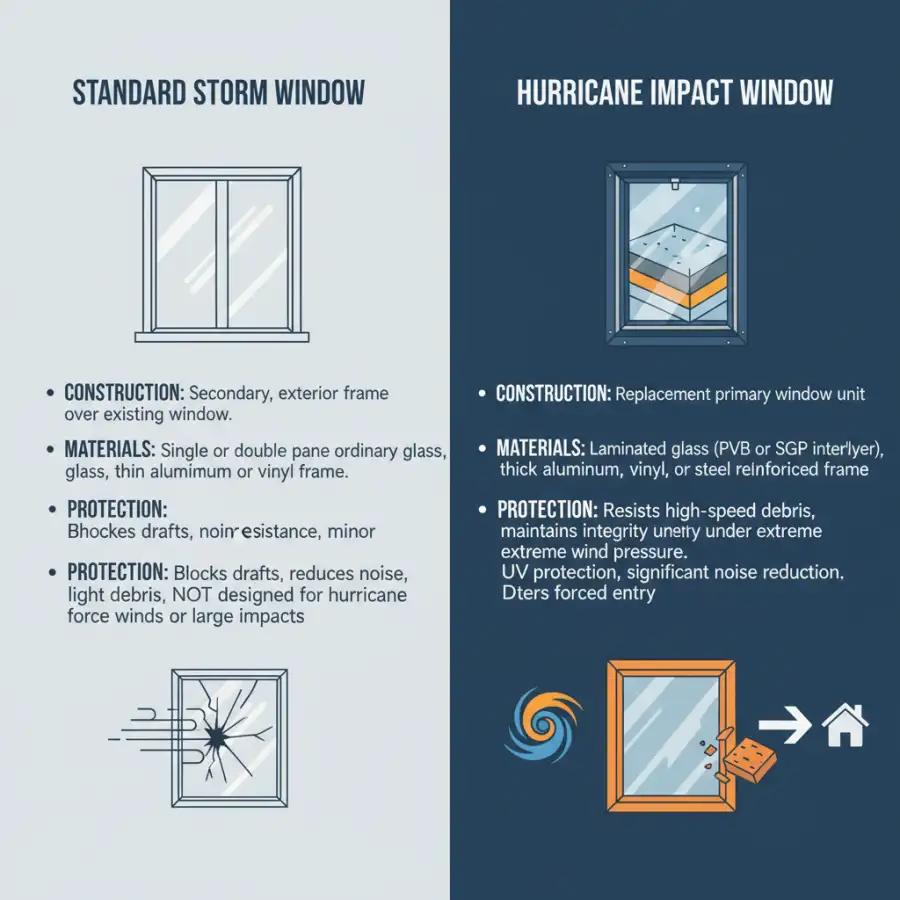
In contrast, impact windows are primary, standalone replacement windows designed from the ground up for extreme durability and protection. Their specialized construction is engineered to remain intact even after direct impact from projectiles. The core of their strength lies in their laminated glass, which consists of two panes of glass bonded together by an interlayer—commonly made of PVB (polyvinyl butyral) or SGP (SentryGlas Plus). This interlayer holds the glass fragments together upon impact, preventing shattering and maintaining the building envelope's integrity. Complementing this fortified glass are robust frames, often reinforced vinyl, heavy-gauge aluminum, or strong fiberglass, combined with heavy-duty anchoring systems that securely fasten the entire unit to your home's structure. These windows are rigorously tested and certified to withstand missile impact (meeting standards like ASTM E1886/E1996 for large and small missile impact) and cycling pressure, ensuring they protect against high winds, flying debris, and forced entry. Additionally, impact windows offer superior noise reduction and block up to 99% of harmful UV rays. Are you adding a layer of defense, or building an entirely new fortress for your home's openings?
The Unseen Advantages: Benefits Beyond Basic Protection
While the immediate thought of storm and impact windows gravitates towards defense against severe weather, their benefits extend far beyond simply standing strong against a gale. For impact windows, the advantages are particularly comprehensive, touching upon multiple facets of home safety, comfort, and financial well-being.
The most evident benefit is Hurricane and Storm Protection. In regions susceptible to tropical storms and hurricanes, impact windows provide direct, unyielding protection from high winds and flying debris, which are the primary causes of catastrophic building envelope failure. This means no scrambling to board up windows when a storm approaches, offering unparalleled convenience and peace of mind. This protection is not merely about resisting direct impacts; impact windows also play a crucial role in maintaining the structural integrity of your home during a storm. By keeping the building envelope sealed, they prevent drastic pressure changes inside, which can otherwise lead to roof lift-off and widespread structural damage. This integral role in hurricane preparedness offers a level of security that traditional methods, like plywood shutters, simply cannot match, freeing homeowners from the last-minute stress of storm preparation.
Beyond natural disasters, their robust construction translates directly into enhanced Security and Forced Entry Resistance. The laminated glass and reinforced frames make them exceptionally difficult for intruders to breach, acting as a significant deterrent to burglars and providing an invaluable layer of home safety. The laminated glass is exceptionally difficult to break through, and even if the outer pane cracks, the inner layer holds everything together, preventing a large opening. This frustrates intruders, often causing them to abandon their attempts due to the time and effort required for a breach, effectively turning your home into a less appealing target. The added layer of resistance means precious extra minutes for security systems to alert authorities or for occupants to react.
Another often-underestimated advantage of impact windows is superior Noise Reduction. The laminated glass, denser and more complex than standard panes, significantly dampens outside sounds. This is a major benefit for homes situated near busy roads, airports, train lines, or vibrant urban centers, transforming a noisy environment into a quiet, tranquil haven. Imagine the difference a quieter home makes for remote work, sleeping children, or simply enjoying a peaceful evening. Impact windows can significantly reduce exterior noise by 30-50% compared to standard single-pane windows, a noticeable difference that greatly improves indoor comfort and quality of life.
Furthermore, these specialized windows offer excellent UV Protection, blocking up to 99% of harmful ultraviolet rays. This invisible shield safeguards your interior furnishings, flooring, and artwork from fading and degradation over time, preserving your home's aesthetic appeal and value. The constant exposure to UV radiation can cause irreversible damage to cherished possessions. From fading upholstery and carpets to yellowing photographs and degrading wood finishes, UV rays silently diminish the lifespan and beauty of your interiors. Impact windows act as a powerful barrier, preserving these items and reducing the need for costly replacements or repairs over time, safeguarding your investment in home furnishings and decor.
Both storm and impact windows contribute to Energy Efficiency. Impact windows, being highly engineered, typically offer enhanced insulation properties (indicated by low U-factor and Solar Heat Gain Coefficient, or SHGC), leading to reduced heating and cooling costs year-round. Storm windows, while not as robust in protection, primarily serve to improve insulation for older, draftier existing windows, providing a cost-effective way to lower utility bills. Many impact windows feature advanced energy-saving technologies such as low-emissivity (Low-E) coatings and inert gas fills (like argon or krypton) between panes. These features further enhance thermal performance, reflecting unwanted heat in summer and retaining warmth in winter. A lower U-factor indicates better insulation, while an optimized Solar Heat Gain Coefficient (SHGC) means less heat gain from the sun, leading to a consistently comfortable indoor environment and tangible savings on your monthly energy bills. The initial investment often pays for itself through these long-term energy efficiencies.
Speaking of costs, both types of upgrades can potentially qualify for Insurance Savings. In storm-prone areas, installing certified impact windows often results in discounts on homeowner's insurance premiums, a long-term financial incentive. Moreover, investing in high-quality windows can significantly boost your home's value, making it a more attractive and resilient asset in the market. The convenience of not needing to deploy cumbersome plywood or install hurricane shutters every storm cycle adds immeasurable value to everyday living. The long-term financial benefits are substantial. Insurance companies in high-risk areas often offer considerable discounts for homes equipped with certified impact windows, recognizing the reduced risk of storm damage claims. This ongoing saving, combined with the demonstrable increase in your property's resale value, makes impact window installation a financially sound decision, positioning your home as a desirable, resilient asset in the real estate market.
Demystifying the Investment: Storm & Impact Windows Price List and Factors
Understanding the actual investment required for storm & impact windows is often where homeowners seek the most clarity. While the benefits are clear, the associated costs can vary dramatically due to a multitude of factors, making a precise price list difficult to establish without a personalized quote. However, we can break down the key elements that influence the overall expenditure.
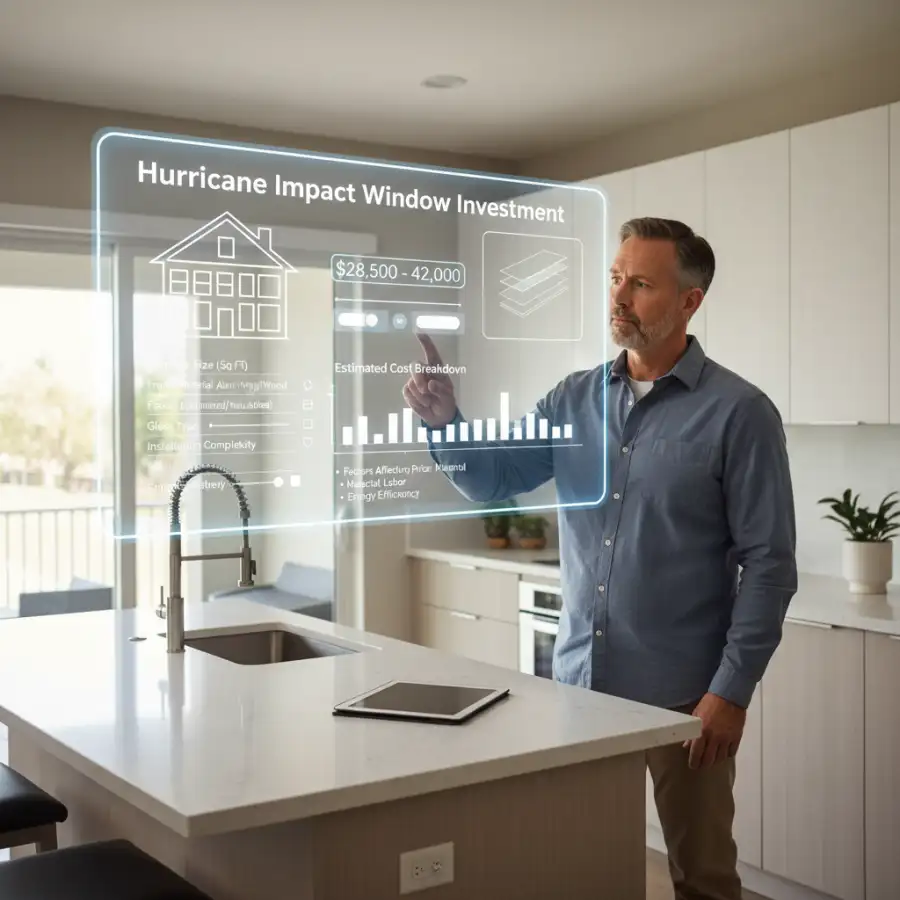
Several factors commonly impact the cost of both storm and impact windows, though they are more pronounced for the latter. The window type plays a significant role; standard double-hung or picture windows will typically be less expensive than casement, slider, or custom-shaped windows. When considering `window type`, beyond basic shapes, specialty windows like bay, bow, garden, or even custom geometric designs will naturally command higher prices due to increased material and fabrication complexity. Each type serves a specific aesthetic or functional purpose, and integrating impact resistance into these specialized designs requires meticulous engineering and precise manufacturing. The frame material is another major determinant. Vinyl frames are generally the most affordable and offer good energy efficiency. Aluminum frames are strong and durable, often used in commercial applications or for their slim profiles, falling into a mid-range price. Fiberglass frames represent a premium option, offering exceptional durability, energy efficiency, and stability, but at a higher cost. Wood or wood-clad options are also available for those prioritizing aesthetics and traditional appeal, coming with a premium price tag and more maintenance.
For impact windows, the glass type and configuration are critical. Laminated glass, its thickness, and whether it's combined with insulated glass units (for enhanced energy performance) will impact pricing. Tinting or specialized coatings for UV protection or privacy can also add to the cost. Design and aesthetics, such as custom colors, grilles, or specific hardware finishes, can further elevate the investment. The installation complexity is a significant variable. Factors like the size and accessibility of the window openings (e.g., upper-story installations), any existing framing issues that require repair, or the need for lead paint abatement in older homes, can all increase labor costs. The intricacy of the installation process also includes factors like the depth of the window frame, the condition of the existing rough opening, and whether any structural modifications are needed. For older homes, issues like rotten sills or out-of-square openings add to the labor, while multi-story installations require specialized equipment and safety protocols, driving up costs. Proper sealing and flashing are critical to ensure water resistance, especially in hurricane-prone zones, adding another layer of skilled labor. Are you paying for glass and frames, or for a meticulously engineered shield that secures your most valuable asset?
Speaking of labor costs, these vary significantly by region and the expertise of the installer. Expect to pay more for certified, experienced professionals who specialize in impact-rated installations. For impact windows, specific certifications like Florida Product Approval or Miami-Dade Notice of Acceptance (NOA) are critical for compliance in high-velocity hurricane zones and often reflect the higher engineering and testing costs. Now, let's look at some general cost estimates:
- Storm Windows (Material Only): Expect to pay between $100 and $400 per window. Professional installation can add an additional $50-$150 per window, depending on complexity.
- Impact Windows (Fully Installed): These are a more significant investment, typically ranging from $400 to $1,200+ per standard-sized window. Custom sizes, premium frame materials like fiberglass or wood clad, and windows with higher impact ratings for extreme conditions can easily push costs to $1,500, $2,000, or even $2,500+ per window.
It's also worth noting that regional variations can play a role. Areas with stringent building codes and high demand for hurricane protection, such as Florida or other Gulf Coast states, might see different pricing structures compared to less storm-prone regions. Furthermore, it's worth exploring potential financial aids. Some local governments or utility companies offer tax credits, rebates, or incentives for energy-efficient home improvements, including impact windows. Homeowners should research these programs, as they can significantly offset the upfront costs. Options for financing, such as home equity lines of credit (HELOCs) or specialized window financing plans from installers, can also make these crucial upgrades more accessible, allowing you to secure your home without immediate financial strain.
Choosing Your Shield: Top-Rated Options and What to Look For
Navigating the market for protective windows can be daunting, but armed with the right knowledge, you can confidently select the ideal shield for your home. Your choice will depend on your specific needs: whether you're primarily seeking energy efficiency or uncompromising storm and security protection.
For impact windows, rigorous vetting is essential. Start by looking for critical certifications. These include ASTM E1886/E1996 ratings for missile impact and cycling pressure, and region-specific approvals like Florida Product Approval or Miami-Dade Notice of Acceptance (NOA), which are vital in high-velocity hurricane zones. These certifications ensure the windows have undergone stringent testing and meet the highest standards for performance. Pay close attention to glass and frame quality; the thickness of the laminated glass interlayer and the reinforcement of the frame material are key indicators of durability. Also, consider the U-factor (rate of heat loss) and SHGC (Solar Heat Gain Coefficient), as these ratings reflect the window's energy efficiency. A comprehensive warranty covering both glass breakage and frame integrity provides long-term peace of mind. Finally, the installer's reputation is paramount. Choose certified, experienced professionals who specialize in impact window installations, as proper installation is as crucial as the product itself. Reputable brands like PGT Custom Windows + Doors, CGI Impact Windows & Doors, Simonton, and Andersen Stormwatch are often cited for their quality and certifications (mention these as examples, not endorsements).
If your primary goal is energy efficiency and moderate protection, storm windows are a more cost-effective choice. Look for options with high-quality material and a tight fit to ensure an effective seal against drafts. For temporary installations, ease of use for deployment and removal is a practical consideration. If energy efficiency is paramount, opt for models with an Energy Star rating. You'll also need to decide between DIY installation or professional help, depending on your skill level and the complexity of the windows. How do you sift through the myriad choices to find the perfect blend of protection, performance, and aesthetic appeal for your unique home?
Ultimately, your decision should harmonize with local building codes, your personal aesthetic preferences, your budget, and your long-term goals for home improvement. For those considering a premium aesthetic alongside robust protection, exploring a luxury window replacement comparative guide might offer insights into high-end options that perfectly blend form and function.
What this means for you
For you, the homeowner, making an informed decision about storm and impact windows transcends a mere purchase; it's a strategic investment in the long-term resilience, comfort, and value of your most cherished asset. Understanding the critical nuances between these protective options empowers you to confidently navigate the market, ask the right questions, and ultimately choose a solution perfectly tailored to your home's unique needs and your regional risks. It means moving beyond generic window solutions to embrace a level of protection that offers tangible, daily benefits.
The choice to upgrade translates into unparalleled safety for your family and possessions during severe weather events, mitigating the stress and potential damage that accompany hurricanes or strong storms. Beyond disaster preparedness, you gain enhanced security against forced entry, adding a crucial layer of defense against intruders. The quieter indoor environment, courtesy of the superior sound dampening, transforms your home into a more peaceful sanctuary. Significant energy savings will manifest in lower utility bills, year after year, effectively putting money back in your pocket. Furthermore, the potential for reduced homeowner's insurance premiums and an increase in your property's market value solidifies this as a wise financial move. This isn't simply replacing glass; it's about making a profound upgrade to your home's overall integrity, comfort, and future security. How will a deeper understanding of these protective options truly transform your sense of security and your home’s future value?
Risks, trade-offs, and blind spots
While the benefits of investing in robust storm and impact windows are compelling, a prudent homeowner must also consider the potential risks, trade-offs, and often-overlooked blind spots. The most immediate hurdle for many is the cost versus budget equation. Impact windows, being a premium, highly engineered product, represent a significant upfront financial outlay. This can be a barrier, necessitating careful financial planning and a clear understanding of the trade-off between immediate expenditure and long-term gains in safety, efficiency, and value.
Perhaps the greatest risk, however, lies not in the product itself but in installation quality. Even the highest-rated impact window will fail if it's not installed correctly according to manufacturer specifications and local building codes. Poor installation can negate all the product's benefits, leaving your home vulnerable. This underscores the critical importance of vetting installers meticulously, checking their certifications, references, and insurance. Another consideration can be aesthetic compromises. While modern impact windows are increasingly sleek, some designs, especially older ones, might feature thicker frames or visible laminations that could subtly alter your home's exterior appearance, which is a trade-off for enhanced protection. Additionally, while generally low-maintenance, specific tasks like checking frame sealing or drainage might be periodically required, representing a minor ongoing commitment.
It's also important to recognize that while highly effective, no window is a complete panacea. Extreme, unforeseen conditions can still cause damage, though significantly less severe than with standard windows. Be wary of misleading marketing that blurs the lines between "storm-resistant" (often referring to basic storm windows) and "impact-rated" (referring to certified, high-performance windows). Finally, for impact window installations, the permitting complexities involved with local building codes can be time-consuming and require a solid understanding of regulatory requirements. This can be particularly intricate for homeowners managing the project themselves. Drawing parallels to larger-scale projects, understanding the intricacies of decoding commercial window replacement costs can highlight how complex and costly installations demand meticulous planning and professional oversight. What unseen challenges or overlooked considerations could turn your protective upgrade into an unexpected headache?
Main points
- Storm windows are secondary installations primarily for energy efficiency; impact windows are primary, structurally reinforced replacements designed for severe weather and security.
- Impact windows offer superior protection against hurricanes, forced entry, noise, and harmful UV rays, alongside significant energy efficiency benefits.
- Costs for both types vary widely based on window type, frame material, glass configuration, design choices, and particularly the complexity of installation; impact windows represent a premium investment.
- Always verify relevant certifications (e.g., ASTM E1886/E1996, Florida Product Approval) and prioritize highly reputable, certified installers, especially for impact windows.
- Beyond enhanced safety, key benefits include potential homeowner's insurance premium reductions, increased home value, and a more comfortable, quieter indoor environment.
- Be mindful of trade-offs such as the initial high cost of impact windows, potential aesthetic impacts, and the critical importance of professional, code-compliant installation.
- Thorough research, obtaining multiple detailed quotes, and understanding all contract specifics are absolutely essential for making an informed purchasing decision.
- Investing in the right protective windows is a long-term strategic move, enhancing your home's resilience, comfort, and providing invaluable peace of mind for decades to come.
Secure your sanctuary with confidence. Explore certified storm and impact window options today to find the perfect blend of protection, performance, and peace of mind for your home.