

Window Repair vs. Replacement: A Comprehensive Cost-Benefit Guide
Uncover when to fix and when to replace for optimal home value, energy efficiency, and long-term savings.
A broken window pane or a persistent draft can feel like a minor nuisance, but it often signals a much larger decision. Are you truly equipped to make the choice that benefits your home and wallet most?
Imagine facing the dilemma: a quick fix or a complete overhaul? Understanding the true cost and long-term implications of window repair versus replacement is critical for every homeowner.
With so many factors at play – from spiraling energy bills to curb appeal – the choice between repairing and replacing your windows is rarely simple. What hidden costs or missed opportunities might you overlook without a clear guide?
Every homeowner eventually faces the dilemma of a compromised window: whether it's a small crack, a persistent draft, or visible signs of wear and tear. The immediate impulse might be to seek the cheapest solution, often leading to a quick repair. However, this decision is far more complex than a simple price tag. It impacts your budget, the comfort of your living spaces, your home's energy efficiency, and even its overall market value. Understanding the intricate balance of "Window repair vs. replacement cost" is not just about addressing an immediate problem; it's about making a strategic investment in your property's future.
This comprehensive guide is designed to simplify the decision, providing you with a clear framework for evaluating your options. We will examine the various types of window damage suitable for repair versus those demanding a full replacement. Our exploration will include a detailed comparison of costs, examining both the immediate outlay and the long-term financial implications, including energy savings. We’ll also explore factors like longevity, aesthetic impact, and the distinct considerations for both residential and commercial properties. Our goal is to provide you with this comprehensive knowledge, empowering you to make an informed decision that truly aligns with your specific situation and maximizes the benefits for your home.
Quick navigation
- Understanding the Damage: When Can a Window Be Repaired?
- Beyond the Fix: When Window Replacement Becomes Necessary
- The Cost Factor: Window Repair vs. Replacement Costs Compared
- Energy Efficiency & Longevity: A Long-Term Investment Perspective
- Beyond Residential: Commercial Considerations in Window Replacement
- What this means for you
- Risks, trade-offs, and blind spots
- Main points
Understanding the Damage: When Can a Window Be Repaired?
Not every imperfection or malfunction in a window necessitates a complete overhaul. Often, a targeted repair can effectively address the problem, extend the window's life, and save you significant money. Discerning what types of damage are genuinely repairable is the first crucial step in making an informed decision. Is every flaw a fatal wound, or can many window woes be effectively remedied with targeted repairs that restore both function and aesthetics?
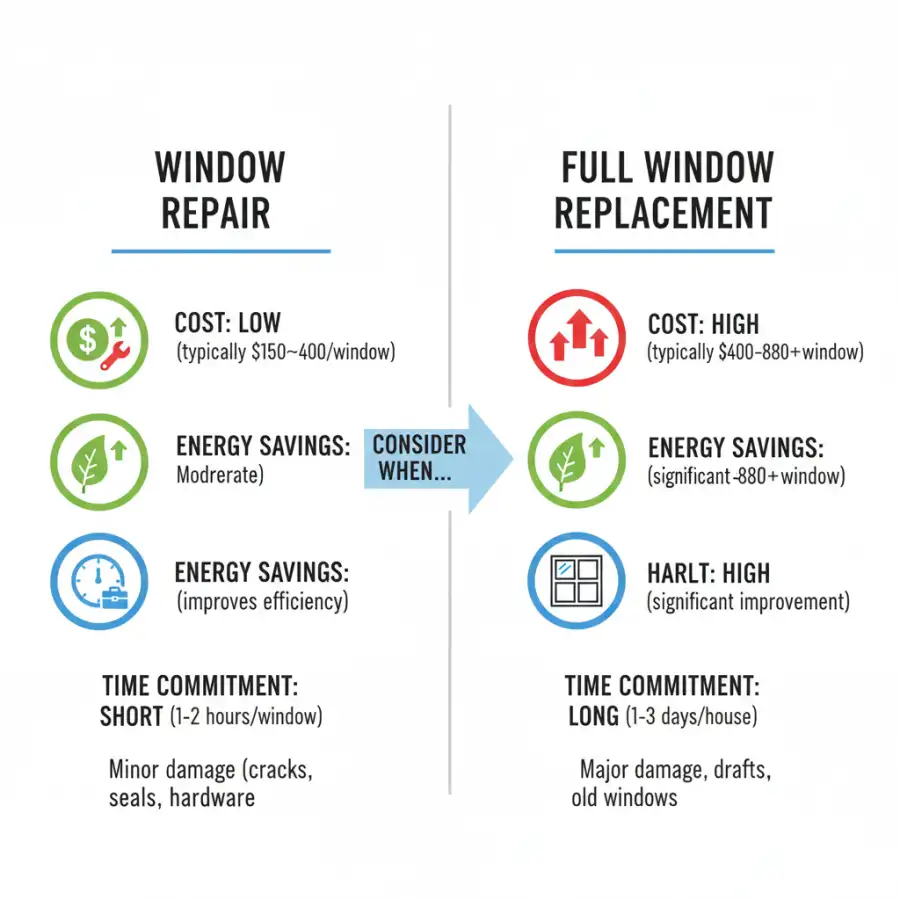
Several common window issues fall squarely into the repairable category:
- Minor Glass Cracks or Chips: Small, superficial cracks or chips, particularly on single-pane windows, can often be sealed with specialized resins or adhesives. This is a viable option for non-structural damage where the integrity of the glass isn't fully compromised. For larger cracks in single-pane glass, simply replacing the glass unit while retaining the existing frame is a cost-effective solution, provided the frame itself is in good condition.
- Foggy or Cloudy Panes: This issue almost exclusively affects double-pane (or triple-pane) windows where the seal between the glass panes has failed, allowing moisture to enter the insulating gap. The good news is that in many cases, the entire window does not need to be replaced. A professional glazier can often replace just the insulated glass unit (IGU) while keeping the original frame intact, saving on the cost of a full window installation.
- Broken or Malfunctioning Hardware: Window hardware, such as latches, locks, cranks, hinges, or balance springs, can wear out or break over time due to frequent use or age. These components are generally standardized and can be individually replaced, restoring smooth operation and security without affecting the window's structural integrity. This is often a straightforward and relatively inexpensive fix.
- Drafts and Leaks: A persistent draft or minor water leak around a window often points to compromised weatherstripping, degraded caulking, or minor frame misalignment. These issues are typically straightforward to fix through re-caulking around the frame, replacing worn weatherstripping, or adjusting the sash. Addressing these problems promptly can prevent further damage to the window frame or surrounding wall.
- Localized Wood Rot: For wooden window frames, small, localized sections of rot can sometimes be cut out and repaired using wood epoxy fillers, followed by sanding and repainting. This is a viable option if the rot has not spread extensively, deeply penetrated the wood, or compromised the frame's essential structural integrity. Early detection is key for a successful and lasting repair.
The key to successful repair is identifying the precise root cause of the problem and ensuring that the underlying structure of the window (the frame and sash) remains sound. A professional assessment can help determine if a repair is a viable, long-term solution or merely a temporary patch on a larger, evolving issue that will inevitably require more significant intervention.
Beyond the Fix: When Window Replacement Becomes Necessary
While many window issues can be resolved with a simple repair, there comes a point when fixing a problem window is no longer a cost-effective or sensible solution. Ignoring these critical indicators can lead to ongoing frustration, escalating energy bills, and even compromised home security. At what point does patching a problem simply delay the inevitable, costing more in the long run than a decisive, one-time replacement that brings lasting benefits?
Here are key scenarios where window replacement isn't just an option, but often a necessity:
- Extensive Frame Damage: If the window frame itself is significantly rotted, warped, soft to the touch, or structurally compromised due to age, prolonged water damage, or pest infestation, a repair is usually insufficient. Extensive frame damage can severely affect the window's ability to operate properly, seal tightly against the elements, and even compromise the structural integrity of your home's wall opening, leading to more serious issues.
- Multiple Broken Panes or Complex Glass Units: While replacing a single insulated glass unit is often viable, if multiple panes are broken across different windows, or if the glass unit is part of a complex, custom design that's outdated or difficult to source, a full replacement may be more efficient and cost-effective than trying to repair piecemeal. Attempting to repair multiple severe issues can quickly add up, exceeding the cost of a new, complete unit.
- Outdated, Single-Pane Windows: Single-pane windows offer minimal insulation, leading to significant heat loss in winter and heat gain in summer. If your home still features these, especially throughout the property, replacing them with modern double-pane or triple-pane units is not just an aesthetic upgrade but a crucial investment in energy efficiency, comfort, and noise reduction. Continuing to use single-pane windows will result in perpetually higher utility bills.
- Persistent Drafts and Leaks Despite Repairs: If you've repeatedly attempted to seal drafts or stop leaks with new caulking or weatherstripping, only for the problems to resurface, it indicates a fundamental issue with the window's design, installation, or widespread material degradation. A new, properly installed window with a tight, factory-sealed system is the only long-term solution to eliminate these recurring issues.
- Desire for Aesthetic Upgrade or Improved Home Value: Sometimes, windows are simply outdated, don't match your home's architectural style, or significantly detract from its curb appeal. New windows can dramatically transform a home's appearance, boost its energy performance, and significantly contribute to its market value. Research suggests that new windows can offer a substantial home value boost, making them a wise investment for homeowners planning to sell.
- Safety and Security Concerns: Old, flimsy windows with weak locks, deteriorated frames, or easily breakable glass can pose a serious security risk to your home and its occupants. Replacing them with modern, reinforced windows featuring robust locking mechanisms, laminated glass, or impact-resistant frames significantly enhances the safety and peace of mind within your property.
When these significant signs appear, viewing replacement not as an expense but as a long-term investment in your home's comfort, efficiency, and value becomes essential. Delaying a necessary replacement can lead to greater energy waste, discomfort, and potentially more extensive, costly repairs down the line, including damage to surrounding walls from moisture intrusion.
The Cost Factor: Window Repair vs. Replacement Costs Compared
For most homeowners, the decision between repairing and replacing a window ultimately comes down to cost. However, a simple comparison of initial repair versus replacement figures can be misleading. A true cost-benefit analysis must factor in not just the upfront expense, but also long-term savings, potential future repairs, and the value added to your home. When examining the price tag, are you truly accounting for the hidden expenditures and future benefits that sway the total cost picture?
Window Repair Costs:
Repairs are generally less expensive in the short term, addressing specific issues. However, these figures can vary significantly based on location, the complexity of the window type, and whether you opt for DIY or professional service. While DIY can save on labor, it requires appropriate skills and tools; improper repairs can lead to further damage.
- Glass Replacement (single pane): Typically ranges from $100 to $300, depending on glass size and type. This is usually a quick fix for isolated cracks.
- Insulated Glass Unit (IGU) Replacement (double pane, foggy): This can range from $200 to $500 per unit, a more cost-effective alternative to full window replacement if the frame is sound. The cost depends on the gas fill and low-E coatings.
- Hardware Replacement (latches, cranks): Usually $50 to $150 per component, plus labor if professionally installed. The price can vary based on the specific part and its availability.
- Weatherstripping/Caulking: Often a DIY job costing $20 to $100 for materials, or $100-$300 for professional re-sealing of multiple windows. Professional sealing ensures a consistent, effective barrier against drafts.
- Minor Wood Rot Repair (epoxy): Can range from $150 to $400 for small sections, depending on the extent of the rot and the labor involved. This is only feasible if the rot is superficial and contained.
Window Replacement Costs:
Full window replacement involves removing the old window and frame and installing a completely new unit. This is a larger upfront investment but offers substantial long-term benefits in terms of efficiency, aesthetics, and structural integrity. Installation costs usually account for 20-40% of the total, reflecting the skill and time required for proper fitting and sealing. Factors influencing replacement costs include window size, style (double-hung, casement, bay), frame material, glass type (low-E, argon gas), and the complexity of the installation.
- Basic Vinyl Windows: Ranges from $300 to $700 per window, installed. These are a popular, cost-effective, and low-maintenance option known for their durability and good energy performance.
- Mid-Range Wood or Fiberglass Windows: Typically $700 to $1,200 per window, installed. These offer enhanced aesthetics, superior durability, and often better energy performance compared to basic vinyl, appealing to homeowners seeking a balance of style and function.
- High-End or Custom Windows: Can exceed $1,200, reaching into several thousands for specialized designs, premium materials (e.g., custom wood, high-performance composite), or advanced energy-efficient features. For insights into advanced options, you might explore articles on luxury window replacement, which detail the added value of bespoke solutions.
While the initial investment for replacement is higher, it often leads to substantial long-term savings through improved energy efficiency and reduced maintenance. The quality of installation is paramount; a poorly installed expensive window will perform worse than a properly installed mid-range one.
Hidden Costs & Long-Term Savings:
The true cost of repair can accumulate rapidly if the problem is recurring or if a temporary fix leads to other issues like water damage to walls. Repeated repair calls can quickly surpass the cost of a new window, not to mention the inconvenience and ongoing discomfort. Conversely, the upfront cost of replacement is consistently offset by potential energy bill reductions (often 10-25%), increased home comfort due to better insulation, and a significant boost to your property's resale value. When making your decision, always consider the total cost of ownership over the next 10-20 years, not just the immediate expense, to gain a full financial perspective.
Energy Efficiency & Longevity: A Long-Term Investment Perspective
Beyond the immediate financial outlay, the decision between window repair and replacement carries significant implications for your home's energy efficiency, comfort, and the overall longevity of your investment. A short-term repair might address a visible flaw, but does it truly serve your home's long-term energy profile and structural integrity, or is it merely a deferral of greater savings and comfort that new windows provide?
The Impact on Energy Bills:
One of the most compelling arguments for window replacement, especially for older, single-pane units, is the dramatic improvement in energy efficiency. Modern windows are engineered with advanced features designed to minimize heat transfer, drastically reducing the workload on your HVAC system:
- Double-Pane and Triple-Pane Glass: These units create insulating air or gas-filled gaps (often with inert gases like argon or krypton) between panes, significantly reducing heat conduction. This barrier prevents heat from escaping in winter and entering in summer.
- Low-E Coatings: A microscopic, transparent metallic coating reflects infrared light (heat) while allowing visible light to pass through. This keeps heat inside during winter and outside during summer, acting like a radiant barrier.
- Insulated Frames: Modern window frames, particularly those made of vinyl, fiberglass, or clad wood, often incorporate insulating chambers or materials to prevent thermal bridging, where heat escapes or enters through the frame itself. This attention to detail ensures the entire window unit contributes to insulation.
- Tight Seals and Weatherstripping: New windows come with superior sealing systems that drastically reduce air leakage, effectively eliminating drafts and further enhancing energy performance. This also helps in reducing external noise penetration.
The cumulative effect of these features is a significant reduction in your heating and cooling costs. While exact savings vary by climate, home size, and existing window efficiency, many homeowners report 10-25% savings on their energy bills after replacing old windows. These savings can, over time, offset a substantial portion of the initial replacement cost, making it a sound long-term investment that also contributes to a reduced carbon footprint.
Longevity and Warranties:
A well-executed repair can extend a window's life by a few years, but it typically doesn't restore it to "like-new" condition or address fundamental design flaws of an aging unit. A repaired window might function adequately, but its overall lifespan will likely remain limited by the age and condition of its unrepaired components. New windows, on the other hand, especially those from reputable manufacturers, come with substantial warranties covering both the product and often the installation. These warranties can range from 10-20 years for components, to lifetime warranties for the glass unit seal, offering peace of mind and protecting your investment for decades.
The lifespan of a properly installed, high-quality replacement window can easily exceed 20-30 years, often outlasting the period of homeownership. This makes replacement a strategic decision for homeowners planning to stay in their property for an extended period, or those looking to maximize resale value. Beyond energy savings and longevity, new windows also contribute to a quieter indoor environment by reducing external noise, and improve overall home comfort by eliminating drafts and maintaining more stable indoor temperatures throughout the year.
Beyond Residential: Commercial Considerations in Window Replacement
While homeowners grapple with the repair versus replacement dilemma, commercial property owners face a similar, yet often more complex, set of considerations when dealing with their building's windows. The decision-making framework, though rooted in similar principles of cost and efficiency, diverges significantly when applied to a business context. Do the same economic and functional principles apply universally, or do commercial window decisions carry distinct weight and unique challenges?
For commercial properties, windows are more than just openings for light and air; they are integral to a business's operational efficiency, security, and public image. Therefore, the decision to repair or replace is influenced by several unique factors:
- Security and Safety: Commercial windows, particularly those at ground level, are often targeted by vandals or burglars. Older, less secure windows may necessitate replacement with reinforced glass, impact-resistant frames, or specialized security glazing like laminated or tempered glass to protect assets, data, and occupants. Enhanced security can significantly reduce insurance premiums and prevent costly downtime from break-ins.
- Aesthetic Impact on Business: A commercial building's exterior, including its windows, significantly contributes to its curb appeal and brand image. Damaged, outdated, or inefficient windows can project a negative image to clients, customers, and potential tenants, potentially impacting business relationships and market perception. Modern, clean windows can signal professionalism, success, and enhance a building's attractiveness, drawing in more foot traffic or clients.
- Code Compliance: Commercial buildings are subject to stricter building codes, fire regulations, and energy efficiency standards than residential properties. Older windows may no longer meet current requirements for thermal performance, egress, or hurricane resistance, making replacement a compliance necessity rather than merely a choice. Failure to comply can result in hefty fines or operational restrictions.
- Tenant Comfort and Retention: In commercial rental properties, efficient windows directly contribute to tenant comfort and lower utility bills, which are key factors in attracting and retaining businesses. Persistent drafts, poor temperature control, or excessive outside noise can lead to tenant dissatisfaction, higher turnover rates, and difficulty in securing new leases. High-quality windows create a more productive and pleasant work environment.
- Maintenance and Operational Costs: Frequent repairs to old, inefficient commercial windows can lead to escalating maintenance costs and disruptions to business operations, impacting productivity. A full replacement, while a larger upfront investment, can drastically reduce ongoing maintenance, leading to long-term operational savings and allowing staff to focus on core business activities.
- Energy Consumption: Commercial buildings often have extensive glazing, making energy efficiency a massive concern, especially given the larger scale of heating and cooling. Replacing old, inefficient windows with high-performance units can result in substantial savings on heating, ventilation, and air conditioning (HVAC) costs, directly impacting the bottom line and demonstrating corporate responsibility.
The scale of commercial window projects is also typically much larger, demanding more extensive planning, specialized contractors experienced in commercial installations, and strict adherence to commercial construction timelines and budgets to minimize disruption. Understanding these distinctions is crucial for business owners and property managers making pivotal decisions about their building's envelope. For more detailed insights into this specialized area, resources like decoding commercial window replacement can provide valuable context.
What this means for you
For you, the homeowner or commercial property manager, this comprehensive guide means gaining a powerful framework for confidently addressing your window concerns. It means moving beyond fragmented information and guesswork to a strategic, informed approach that optimizes your investment and enhances your property's value, comfort, and efficiency. You're no longer simply reacting to a problem; you're making a calculated decision with clear benefits. How much clearer does your path forward become, armed with a complete understanding of your window options, from a quick fix to a full upgrade?
This detailed guide empowers you to accurately assess the nature of window damage, distinguish between repairable flaws and those demanding replacement, and confidently evaluate the associated costs and benefits. You’ll be equipped to ask the right questions of contractors, understand the nuances of energy efficiency ratings (like U-factor and Solar Heat Gain Coefficient), and recognize when an upfront investment in replacement translates into significant long-term savings and increased property value. This expertise will enable you to avoid costly mistakes and choose solutions that truly align with your specific needs, aesthetic preferences, and budget.
Ultimately, this knowledge translates into enhanced comfort within your property through consistent temperatures and reduced drafts, lower energy bills that put money back in your pocket, improved curb appeal that boosts your property's marketability, and greater peace of mind knowing you've made a well-researched, financially sound decision. Whether you opt for a precise repair or a full-scale replacement, you'll do so with clarity and conviction, confident that you are securing the best possible outcome for your home or business.
Risks, trade-offs, and blind spots
While making an informed decision about window repair versus replacement is crucial, it's equally important to acknowledge the inherent risks, trade-offs, and common blind spots that can complicate the process. Even with the best intentions, certain crucial details might be overlooked, potentially turning a seemingly wise window decision into an unexpected financial burden or a source of ongoing frustration. What crucial details might you overlook that could turn a seemingly wise window decision into an unexpected financial burden or a series of aggravating compromises?
Repair Risks: Opting for a repair often presents a lower upfront cost, which is its primary trade-off. However, this can be a short-term gain for a long-term pain. A repair might be a temporary fix that fails to address underlying issues, such as widespread frame deterioration or structural problems, leading to repeated costs over time. Mismatched repairs (e.g., using a different glass type or an ill-fitting patch) can also detract from a window's appearance and diminish its overall performance. Furthermore, attempting DIY repairs without adequate skills, specialized knowledge, or the right tools can inadvertently cause more significant damage, turning a minor issue into a costly professional intervention or even a safety hazard.
Replacement Risks: The most apparent risk with replacement is the high upfront cost. This can be a significant financial burden, especially if multiple windows need replacing simultaneously, requiring careful budgeting and planning. Another major blind spot is choosing the wrong contractor. Improper installation of new windows can negate all their energy efficiency benefits and even lead to new problems like drafts, leaks, structural damage to the wall, or premature wear. The trade-off for superior performance and longevity is the necessity for a substantial initial investment and meticulous contractor selection and vetting. Also, replacing windows might alter the historical or aesthetic integrity of older homes if not carefully planned or if inappropriate styles are chosen, potentially impacting curb appeal negatively and even reducing property value for period homes.
Overlooked Blind Spots:
- Ignoring Cumulative Energy Loss: Many homeowners underestimate the true cumulative cost of energy loss through old, inefficient windows. The incremental daily drafts and heat transfer add up to substantial annual expenses, making a repair seem cheaper in isolation when, in reality, replacement would offer significant long-term savings that far outweigh the upfront cost.
- Underestimating Future Repair Costs: A series of small repairs, while individually inexpensive, can eventually exceed the cost of a single, comprehensive replacement. Homeowners often focus only on the immediate expense of each repair without considering the total cost of ownership over several years.
- Overlooking Property Value Impact: Old, failing windows not only diminish a home's curb appeal but also significantly detract from its overall market value. While difficult to quantify precisely, this is a significant long-term financial blind spot that repairing an outdated window often fails to address, as it doesn't upgrade the home's fundamental attractiveness or energy profile.
- Focusing Solely on Glass: Sometimes, the problem isn't just the glass but the frame, sash, surrounding insulation, or the rough opening itself. Fixing only the glass without addressing underlying structural issues or compromised seals in the frame is a common oversight that leads to recurring problems, leaving the root cause unaddressed.
Understanding these risks and blind spots is not meant to deter you but to encourage a thorough and holistic evaluation. A decision made purely on immediate cost without considering the broader financial, comfort, and longevity implications is a decision made with significant unseen trade-offs that can lead to regret down the line.
Main points
The decision between window repair and replacement is a critical one for any property owner, impacting finances, comfort, and long-term value. By carefully considering the type of damage, associated costs, and long-term benefits, you can make the most informed choice. Here are the main takeaways to guide you:
- Repair is viable for: Minor glass damage, foggy double panes (IGU replacement), broken hardware, and localized drafts or wood rot, provided the underlying frame structure is sound.
- Replacement is necessary for: Extensive frame damage, widespread inefficiency (such as single-pane windows), persistent unresolved issues after multiple repairs, or a desire for significant aesthetic and property value upgrades.
- Cost comparison: Repairs are cheaper upfront (e.g., $100-$500), but replacement offers substantial long-term savings via energy efficiency and reduced future maintenance (e.g., $300-$1200+ per window, installed), often offsetting the higher initial investment.
- Energy efficiency: New windows with double-panes, low-E coatings, and argon gas dramatically reduce energy bills and improve comfort significantly, a benefit rarely achieved through repairs alone.
- Longevity & Warranties: Replacements offer significantly longer lifespans (20-30+ years) and robust warranties (10-lifetime years), providing greater peace of mind and protecting your investment for decades.
- Commercial considerations: Businesses face unique factors like enhanced security requirements, brand image, stringent code compliance, and the importance of tenant comfort and retention when deciding on window upgrades.
- Be aware of risks: Over-reliance on temporary fixes, potential for costly DIY mistakes, the significant upfront replacement costs, and the critical importance of selecting a reputable and skilled installer to ensure proper performance.
- Holistic view: Base your decision on a comprehensive cost-benefit analysis that includes immediate expenses, projected long-term savings, energy efficiency gains, and the overall impact on property value, rather than just the lowest immediate price.
Ready to make the best decision for your windows? Carefully assess your situation, consult with qualified professionals, and choose the path that delivers optimal comfort, efficiency, and lasting value for your home or business.