

Window Replacement for Rental Buildings: A Landlord's Deep Dive into Costs, Compliance, and ROI
Navigate the complexities of upgrading rental property windows, balancing budget with long-term value and tenant satisfaction.
Are outdated windows silently draining your rental property's energy efficiency and tenant appeal?
The thought of replacing all those windows can feel daunting, but what if smart choices could significantly boost your property's value and cash flow?
Discover how strategic window replacement transforms rental buildings into more desirable, profitable assets.
As a landlord or property manager, maintaining and upgrading your rental buildings is a continuous balancing act between immediate costs and long-term returns. Among the many potential renovations, window replacement for rental buildings often presents a unique challenge, demanding careful consideration of upfront investment, energy efficiency gains, tenant comfort, and regulatory compliance. It's not just about aesthetics; it's about structural integrity, noise reduction, security, and ultimately, your bottom line.
This comprehensive guide will walk you through the various costs associated with window replacement, including budget-friendly options and typical average expenditures. We will also delve into crucial financial aspects like tax deductions and the depreciable life of windows, clarify landlord responsibilities, and explore pertinent regulations, with a specific look at California's requirements. By understanding these financial, legal, and practical implications, you can make an informed decision to renovate your properties wisely, enhancing their value and attractiveness.
Quick navigation
- The Strategic Advantage of Window Replacement in Rental Buildings
- Understanding the Costs: Average & 'Cheap' Window Replacement Options
- Maximizing Value: Tax Deductions and Depreciable Life
- Regulatory Compliance and Landlord Responsibilities (e.g., California)
- What this means for you
- Risks, trade-offs, and blind spots
- Main points
The Strategic Advantage of Window Replacement in Rental Buildings
Replacing windows in a rental building might seem like a purely reactive maintenance task, but it holds significant strategic advantages for property owners. It's an investment that can yield substantial returns beyond merely fixing a broken pane. What hidden benefits can modern window replacement bring to your portfolio?
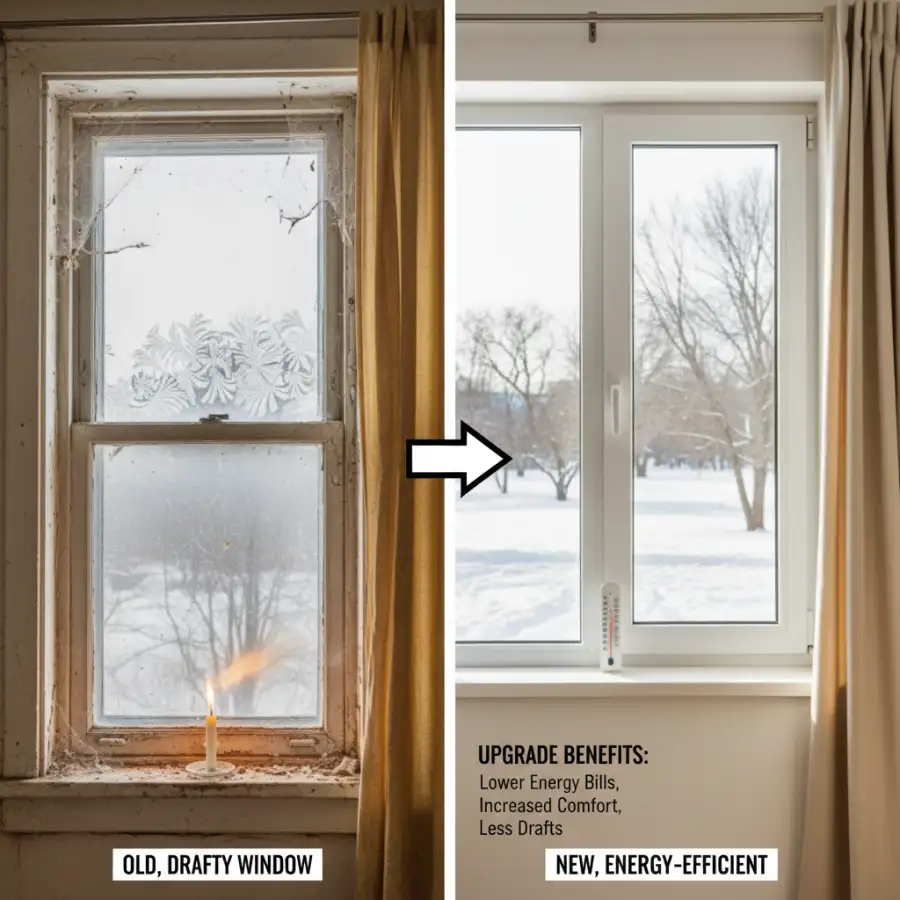
First and foremost, energy efficiency improvements are a major draw. Old, drafty windows are notorious for energy leakage, causing higher heating and cooling bills for tenants. Upgrading to modern, energy-efficient windows (like double or triple-pane, Low-E coated options) can dramatically reduce these costs. This not only makes your units more appealing to environmentally conscious tenants but can also justify slightly higher rents, providing a direct return on investment through reduced utility expenses. Imagine saving tenants 10-20% on their monthly energy bills – that's a powerful selling point.
Beyond Energy Savings:
- Enhanced Curb Appeal: New windows instantly refresh a building's exterior, attracting higher-quality tenants.
- Increased Property Value: Modern windows contribute to the overall appraisal value of your asset.
- Improved Tenant Comfort: Better insulation means more stable indoor temperatures and reduced external noise, leading to happier tenants and longer leases.
- Reduced Maintenance: Modern windows often require less upkeep and are more durable than older models.
- Enhanced Security: Newer window designs typically offer stronger locking mechanisms, improving safety for residents.
Furthermore, improved aesthetics and functionality contribute directly to tenant satisfaction and retention. Tenants are increasingly looking for properties that offer modern amenities and efficient living spaces. New windows can reduce external noise pollution, improve natural light, and simply operate more smoothly, all contributing to a more pleasant living experience. Happier tenants often mean lower vacancy rates and reduced turnover costs, directly improving your profitability. Is the upfront cost truly an expense, or a catalyst for future revenue?
Modern, energy-efficient windows enhance curb appeal and tenant satisfaction.
Understanding the Costs: Average & 'Cheap' Window Replacement Options
The cost of window replacement for rental buildings is often the first and most pressing concern for landlords. Prices can vary widely based on window type, material, size, installation complexity, and regional labor rates. How can property managers navigate these variables to find both average value and genuinely 'cheap' solutions without compromising quality entirely?
On average, homeowners might pay anywhere from $300 to $700 per window, installed, for vinyl double-pane units. For rental properties, especially larger buildings, this cost can accumulate quickly. However, several strategies can help manage expenses. Opting for standard-sized, vinyl-frame windows is often the most budget-friendly choice. Vinyl offers good insulation, minimal maintenance, and a lower price point compared to wood or fiberglass. Choosing a reputable local installer who offers volume discounts for multiple units can also lead to significant savings. When considering major renovations like this, it's always wise to understand all potential costs, much like calculating the roof replacement cost per square, to ensure proper budgeting.
| Window Type/Material | Average Cost per Window (Installed) | Pros for Rentals | Cons for Rentals |
|---|---|---|---|
| Vinyl (Double-Pane) | $300 - $700 | Most cost-effective, good insulation, low maintenance. | Less customizable, can look less premium than other materials. |
| Aluminum (Single/Double-Pane) | $200 - $600 | Very durable, slim frames, good for modern look. | Poor thermal performance (especially single-pane), can corrode. |
| Fiberglass (Double-Pane) | $600 - $1,200 | Highly durable, energy efficient, looks like wood, low maintenance. | Higher initial cost. |
| Wood (Double-Pane) | $800 - $1,500+ | Excellent insulation, premium aesthetic, customizable. | Highest cost, high maintenance (painting/sealing), susceptible to rot. |
For truly 'cheap' options, landlords might explore bulk purchases directly from manufacturers or specialized contractors dealing with property management companies. Sometimes, buying stock sizes rather than custom-fitted windows can reduce costs, though this might involve minor adjustments to the window openings. Remember that while saving money is crucial, sacrificing essential features like double-pane insulation or robust locking mechanisms can lead to higher long-term costs in energy waste, security issues, or frequent repairs. It's a balance of initial outlay versus future savings and tenant satisfaction. Is the cheapest option always the most economical in the long run?
Professional installation ensures maximum energy efficiency and durability.
Maximizing Value: Tax Deductions and Depreciable Life
For landlords, the financial implications of window replacement for rental buildings extend beyond the initial purchase and installation costs. Understanding how these expenses can be treated for tax purposes and their depreciable life is crucial for maximizing your return on investment. How can savvy property owners leverage tax laws to their advantage?
Capital Expense vs. Repair Expense
The IRS generally categorizes window replacement as a capital expense rather than a repair, especially if it's a significant upgrade that increases the property's value, extends its useful life, or adapts it to a new use. This means you typically cannot deduct the entire cost in the year of the expense. Instead, you depreciate the cost over the useful life of the property. However, if you are simply replacing a broken pane or a single window to maintain the property's current condition, it might be classified as a repair and fully deductible in the year incurred. Always consult a tax professional for specific guidance.
Depreciable Life of Windows
For residential rental properties, the depreciable life of improvements, including new windows, is typically 27.5 years. This means you can deduct a portion of the window replacement cost each year over that period. While this doesn't provide an immediate large deduction, it steadily reduces your taxable income over a long timeframe, essentially spreading the financial benefit of the investment. Understanding the depreciable life helps you forecast long-term financial impacts and plan for future upgrades. This long-term perspective is similar to assessing an investment in eco-friendly roofing, where initial costs are offset by long-term savings and tax benefits.
Energy Efficiency Tax Credits: Keep an eye out for potential federal, state, or local tax credits for installing energy-efficient windows. These credits can directly reduce your tax liability, offering another avenue for cost recovery beyond depreciation. Programs often change, so regular checks are beneficial.
Impact on Property Value
Beyond direct tax benefits, new windows contribute to the overall appraised value of your rental property. Appraisers consider improvements that enhance energy efficiency, aesthetics, and structural integrity. A higher property value can translate into greater equity, better refinancing options, and a more robust selling price when you eventually decide to divest. So, is it just an expense, or a value-add that continues to pay dividends?
Regulatory Compliance and Landlord Responsibilities (e.g., California)
Landlords face specific legal and ethical responsibilities regarding the safety and habitability of their rental properties, and windows are a key component of this. When undertaking window replacement for rental buildings, understanding regulatory compliance is not optional; it's a legal imperative. What are the core responsibilities and regulations, particularly in a state like California?
Habitability Standards and Safety
Landlords are generally required to provide and maintain a safe and habitable living environment. This includes ensuring windows are in good working order, preventing drafts, and providing adequate security. Broken windows, those that cannot be properly secured, or those with lead paint hazards (in older buildings) can violate habitability codes. Replacing them is often a necessary step to meet these legal obligations and avoid potential lawsuits or tenant complaints.
Building Codes and Permits
Any significant window replacement project almost certainly requires adherence to local building codes and, often, obtaining permits. Codes specify requirements for emergency egress (especially for bedrooms), energy efficiency (U-factor and SHGC ratings), and structural integrity. In many areas, including California, energy code requirements for new windows are quite stringent. Failing to obtain necessary permits or adhere to codes can result in fines, project delays, or even the requirement to redo the work. Are you absolutely certain you have all the necessary approvals?
Lead Paint Concerns (Older Buildings): If your rental building was constructed before 1978, lead-based paint might be present on or around windows. Window replacement in such buildings requires specific lead-safe work practices and disclosures under federal and, often, state regulations (e.g., California's Proposition 65 implications). Non-compliance can lead to severe penalties.
Specific Regulations (Example: California)
California, known for its strong tenant protections and environmental regulations, has specific requirements for windows in rental properties. These include:
- Energy Efficiency: California Title 24 mandates strict energy efficiency standards for new and replacement windows, requiring specific U-factor and Solar Heat Gain Coefficient (SHGC) ratings.
- Safety Glass: Safety glazing is required in certain locations, such as near doors or in bathrooms, to prevent injury.
- Emergency Egress: Windows in sleeping rooms must meet minimum size requirements for emergency exit.
- Window Security: Landlords must provide windows that are lockable and secure.
These state-specific rules illustrate the importance of researching local regulations before starting any project. Ignorance of the law is not a valid defense, and violations can lead to costly fines or legal action.

Navigating building codes and compliance is crucial for successful window replacement.
What this means for you
For landlords and property managers, the decision to invest in window replacement for rental buildings is a multi-faceted one, influencing not only your budget but also your property's market appeal and long-term viability. What's the bottom line for your specific investment strategy?
If you manage older properties with original windows, the benefits of replacement are likely substantial. You will see improvements in energy efficiency, leading to lower utility bills for tenants (a strong competitive advantage), and a refreshed aesthetic that can command higher rents and attract better quality tenants. The long-term depreciation benefits, combined with potential energy credits, help offset the initial capital outlay.
Strategic Renovation Mindset: View window replacement not as a burdensome expense, but as a strategic renovation that directly enhances your property's value, operational efficiency, and attractiveness in a competitive rental market. It's a key component of sustainable property management.
However, if your buildings have relatively new or functional windows, a full replacement might not be the most immediate priority for your budget. In such cases, focusing on maintenance and minor repairs might be a more cost-effective approach. Always conduct a thorough cost-benefit analysis, considering the age and condition of existing windows, local energy costs, and current market demand for efficient units. Remember to factor in all potential costs and benefits, similar to how you would assess an insurance claim for a roof replacement, as both are significant property investments.
Ultimately, a well-executed window replacement project will improve your property's financial performance, reduce headaches related to maintenance, and cultivate a more positive living experience for your tenants.
Risks, trade-offs, and blind spots
Despite the clear advantages, window replacement for rental buildings comes with its share of risks, trade-offs, and common blind spots that savvy landlords should consider. What are the potential pitfalls that could derail your project or undermine your investment?
Subpar Installation: Even the most expensive, energy-efficient windows can perform poorly if installed incorrectly. Improper sealing can lead to drafts, moisture intrusion, and mold, negating energy savings and potentially causing structural damage. Always hire experienced, licensed, and insured contractors with a strong track record in rental property work.
A significant trade-off involves tenant disruption. Replacing windows is an intrusive process that can cause noise, dust, and temporary loss of privacy for residents. Failing to communicate clearly, manage expectations, or offer reasonable accommodations during the project can lead to tenant dissatisfaction, complaints, or even demands for rent reductions. Effective project management and tenant communication are paramount to mitigating this risk.
Another blind spot is underestimating the scope of work or unexpected issues. Old window frames might conceal rotted wood, damaged siding, or even structural problems that only become apparent during removal. These unforeseen issues can significantly increase project costs and timelines. Budgeting a contingency fund (typically 10-15% of the total project cost) is essential to absorb these surprises without derailing your finances.
Finally, property managers sometimes overlook the long-term impact of material choice. While 'cheap window replacement' options like basic vinyl are cost-effective upfront, they might have a shorter lifespan or require more frequent repairs than higher-quality materials like fiberglass or higher-grade vinyl. The initial savings could be eaten up by more frequent replacement cycles or increased maintenance expenses down the line. Are you truly looking at the total cost of ownership, or just the immediate bill?
Main points
Making a well-informed decision about window replacement for rental buildings requires a holistic understanding of its costs, benefits, and obligations. Here are the key takeaways for landlords and property managers:
- Strategic Investment: Window replacement is a significant upgrade that boosts energy efficiency, curb appeal, property value, and tenant satisfaction, leading to long-term returns.
- Cost Management: Budget for $300-$700 per window for vinyl double-pane, considering volume discounts and standard sizes for 'cheap' options. Balance initial cost with long-term performance.
- Tax Benefits: Treat window replacement as a capital expense, depreciating costs over 27.5 years. Research potential energy efficiency tax credits to further offset expenses.
- Regulatory Compliance: Adhere to habitability standards, building codes (including emergency egress and safety glass), and specific state regulations (e.g., California's Title 24 for energy efficiency).
- Address Lead Paint:1 For pre-1978 buildings, implement lead-safe work practices and disclosures to avoid legal penalties and tenant health risks.
- Mitigate Risks: Hire licensed contractors, plan for tenant communication and disruption, and budget for unforeseen issues with a contingency fund.
- Focus on Long-Term Value: Choose materials and installers that offer durability and performance, considering the total cost of ownership rather than just the lowest upfront price.
Invest wisely in your rental properties' windows. Prioritize thorough research, responsible budgeting, and adherence to regulations to secure enhanced value, happier tenants, and a stronger financial outlook for your portfolio.