

Beyond the Bargain: How to Avoid Low-Quality HVAC Installations and Services
A Homeowner's Guide to Recognizing and Selecting Professional HVAC Contractors
That low-cost HVAC quote might seem like a steal today, but could it lead to years of high bills and headaches? Don't fall into the trap of false savings.
From shoddy installations to inexperienced technicians, the signs of a subpar HVAC service can be subtle until it's too late. Do you know how to spot them?
Protect your investment and your home's comfort. Learn the critical distinctions that empower you to choose genuinely professional HVAC care and avoid costly mistakes.
The promise of a significantly lower price on HVAC services can be incredibly tempting. Whether it's for a new installation, a major repair, or routine maintenance, the allure of saving money upfront often overshadows the crucial need for quality and professionalism. However, in the complex world of heating, ventilation, and air conditioning, 'low cost' frequently translates directly into 'low quality,' leading to a cascade of problems that far outweigh any initial savings. This guide is designed to equip you, the homeowner, with the knowledge and insights needed to navigate the HVAC market confidently, recognize the red flags of subpar service, and understand the hallmarks of a truly professional contractor. By learning how to avoid low-quality HVAC installations and services, you can safeguard your comfort, enhance your system's efficiency, and protect your long-term investment.
Quick navigation
- The Foundation: Why Avoiding Subpar HVAC Work is Critical
- Essential HVAC Rules Every Homeowner Should Know (and Demand)
- Identifying a Professional: Red Flags and Green Lights
- What this means for you
- Common Mistakes Homeowners Make (and How to Avoid Them)
- Risks, trade-offs, and blind spots
- Main points
The Foundation: Why Avoiding Subpar HVAC Work is Critical
Your home's HVAC system is a foundational element of its comfort, health, and value. It's not just about heating and cooling; it actively filters your indoor air, manages humidity levels, and contributes significantly to your overall energy efficiency. When this intricate system is installed or maintained improperly, the repercussions are far-reaching and detrimental. Think about the silent creep of higher energy bills as a struggling unit overworks itself, or the frustration of frequent breakdowns during extreme weather. Beyond convenience, there are serious risks to consider, such as compromised indoor air quality leading to allergies or respiratory issues, premature equipment failure that forces expensive replacements, and even critical safety hazards like carbon monoxide leaks from improperly vented furnaces.
Choosing a subpar contractor, tempted by an initial low bid, is not a minor inconvenience; it's a substantial financial risk that impacts your home's long-term operational costs and its resale value. The ripple effect can include voided manufacturer warranties, making future repairs entirely out-of-pocket, and a diminished sense of security in your own home. A professional HVAC service, on the other hand, ensures that your system operates safely, efficiently, and reliably for years to come. Is a few hundred dollars saved upfront truly worth years of discomfort, endless repairs, and potentially serious health risks?
Essential HVAC Rules Every Homeowner Should Know (and Demand)
Navigating the HVAC industry can feel daunting, but understanding a few key principles empowers you to distinguish between genuine professionals and those cutting corners. These aren't just obscure technicalities; they're fundamental guidelines that dictate the performance and longevity of your system.
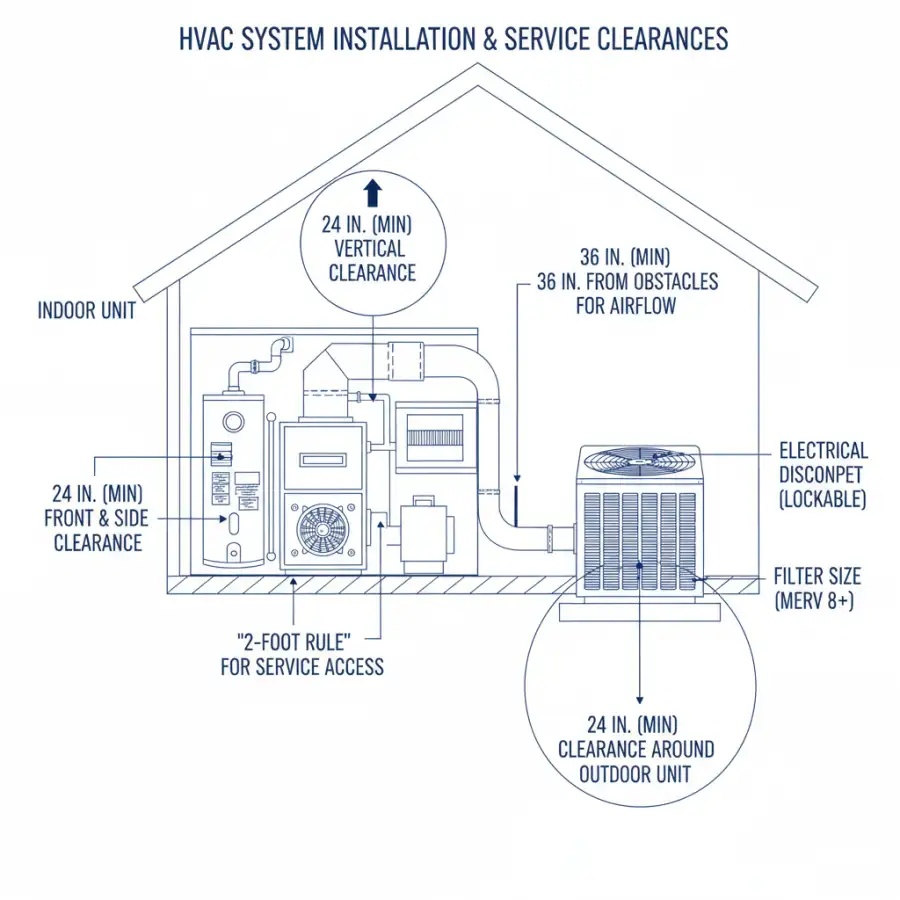
One such vital guideline is The 2-Foot Rule in HVAC. While not a legal code, this is a widely accepted best practice referring to the minimum clearance required around outdoor condenser units and for access to equipment in confined spaces. For your outdoor unit, maintaining at least two feet of clear space on all sides (or as specified by the manufacturer) is crucial. This ensures unrestricted airflow, which is essential for the unit to efficiently dissipate heat from your home. Without proper airflow, the condenser overworks, leading to reduced cooling capacity, higher energy consumption, and accelerated wear on vital components. Similarly, in an attic or crawl space, a professional will ensure at least two feet of clear access around equipment for safe and effective maintenance. Violation of this rule is a clear indicator of unprofessionalism and a precursor to system strain and inefficiency.
Another common framework that homeowners often encounter is The "$5,000 Rule". This guideline, while not universally fixed at $5,000, suggests a threshold for repair costs. If a repair approaches or exceeds roughly 50% of the cost of a new, comparable system, it's often more financially prudent in the long run to invest in a full system replacement rather than sinking money into an aging or frequently failing unit. A truly professional contractor won't just push for the cheapest fix; they will provide a transparent cost-benefit analysis, detailing the immediate repair expense versus the long-term savings in energy efficiency and reduced breakdowns that a new system offers. This helps homeowners make informed decisions about HVAC installation costs and system upgrades.
Environmental responsibility also plays a critical role, highlighted by The 3 R's of Refrigerant: Reclaim, Recover, Recycle. These aren't merely suggestions but legal obligations for HVAC professionals. Recovering refrigerant involves safely removing it from a system without releasing it into the atmosphere. Recycling cleans the recovered refrigerant to a specific standard for reuse. Reclaiming is the most rigorous process, purifying refrigerant to nearly new specifications for resale. Adherence to these practices is a definitive sign of a responsible and compliant contractor, distinguishing them from those who might illegally vent refrigerants, harming the environment and often indicating other shortcuts in their work. Are these just industry buzzwords, or are they fundamental principles that dictate the performance and longevity of your HVAC system?
Beyond these, professional contractors also prioritize proper system sizing via Manual J calculations, correct ductwork design (Manual D) to ensure even air distribution, and precise installation according to manufacturer specifications. These critical steps prevent common 'low quality' issues like short-cycling, uneven heating or cooling, and premature system failure.
Identifying a Professional: Red Flags and Green Lights
When selecting an HVAC contractor, knowing what to look for and what to avoid can make all the difference between a smooth experience and a costly nightmare. Here are the clear indicators:
Green Lights (What to look for):
- Proper Licensing and Certification: This is paramount. Stress that a professional will readily provide proof of state licenses and relevant industry certifications, particularly NATE (North American Technician Excellence). NATE-certified technicians have passed rigorous exams covering specific HVAC areas, demonstrating a high level of competence. Comprehensive insurance (liability and worker's compensation) is also non-negotiable; it protects you from financial responsibility in case of accidents or property damage.
- Detailed, Transparent Quotes: A truly professional quote is never vague. Expect an itemized breakdown of all costs, including equipment, labor, materials, permits, and any auxiliary services. The quote should clearly define the scope of work, provide precise timelines, outline both manufacturer and labor warranties, and specify payment terms. This transparency prevents hidden fees and builds trust.
- Thorough Assessment and Load Calculation: A professional will conduct a detailed, in-person assessment of your home's specific heating and cooling needs. This includes a Manual J load calculation, which considers factors like insulation, window efficiency, home orientation, and internal heat gains. They will never offer a one-size-fits-all solution or quote a system without a proper inspection.
- Excellent Communication: Look for a contractor who communicates proactively and clearly, from the initial consultation to post-service follow-up. They should patiently answer your questions, address concerns, and set realistic expectations regarding timelines, costs, and system performance.
Red Flags (What to avoid):
- Unusually Low Bids: While a bargain is tempting, bids significantly lower than others often indicate cut corners. This could mean substandard materials, inexperienced or unlicensed labor, skipped essential procedures (like proper sizing or permitting), or a lack of adequate insurance. These shortcuts invariably lead to higher long-term costs.
- Lack of Credentials: Be wary of contractors who cannot readily provide proof of current licensing, adequate insurance, or relevant certifications. This suggests they may not meet industry standards or are operating illegally.
- Vague or Pressure-Filled Contracts: Avoid contractors who demand cash-only payments, pressure you into immediate decisions without allowing time for consideration, or provide proposals with scant details. Reputable companies offer clear, written contracts.
- Skipping Site Visits/Assessments: A contractor who provides a quote over the phone or without a thorough on-site inspection is a major red flag. Without assessing your home's unique characteristics, they cannot accurately size a system or diagnose issues, leading to incorrect and inefficient installations.
How can you sift through the noise and confidently choose a contractor who truly prioritizes your home's needs over their bottom line? Finding reliable AC contractors starts with recognizing these crucial green lights and avoiding the red flags.
What this means for you
Making the right choice in an HVAC contractor translates into a profound difference for your home and your quality of life. The benefits extend far beyond the immediate installation or repair.
First and foremost, you gain Lasting Comfort and Optimal Efficiency. A professionally installed and maintained system will operate at peak performance, consistently delivering precisely controlled indoor temperatures and ideal humidity levels. This precision means your home feels comfortable year-round, while simultaneously minimizing energy consumption. The result? Significantly lower utility bills that compound into substantial savings over the lifespan of your system.
Secondly, you can expect Extended System Lifespan and Fewer Breakdowns. Correct installation, proper sizing, and adherence to manufacturer-recommended maintenance schedules are the cornerstones of durability. This proactive approach prevents premature wear and tear on components, drastically reducing the frequency and cost of repairs. Your unit will serve you reliably for its full expected lifespan, safeguarding your significant investment and preventing the stress of unexpected failures during peak seasons.
Crucially, professional work ensures Enhanced Safety and Regulatory Compliance. Reputable contractors meticulously adhere to all local building codes, safety regulations (including electrical, gas, and ventilation standards), and environmental mandates. This vigilance protects your family from potential hazards such as carbon monoxide leaks, electrical fires, or the improper handling of refrigerants. A professional ensures your system operates not only efficiently but also legally and safely. Beyond the immediate transaction, what true, enduring value does a professional HVAC service deliver to your household?
Ultimately, the culmination of these benefits provides you with Genuine Peace of Mind. Knowing that your home's most vital climate control system is a reliable asset, installed and maintained by capable, trustworthy professionals, frees you from constant worry about its performance or unexpected costly problems. It’s the confidence that comes from a job done right, allowing you to simply relax and enjoy your comfortable, safe, and efficient home.
Common Mistakes Homeowners Make (and How to Avoid Them)
Even with good intentions, homeowners frequently make crucial mistakes when dealing with HVAC services that can lead to significant problems down the line. Awareness is your first line of defense.
Mistake 1: Prioritizing the Lowest Bid Above All Else. This is perhaps the most common and costly error. The temptation of a bargain is powerful, but in HVAC, an unusually low bid often signals cut corners. This could mean using substandard materials, employing inexperienced or unlicensed labor, skipping essential steps like load calculations, or failing to pull necessary permits. The false economy of a low upfront cost invariably leads to higher energy bills, frequent breakdowns, premature system failure, and expensive repairs that far exceed any initial savings. To avoid this, gather at least three detailed quotes and view them critically, not just by the bottom line.
Mistake 2: Failing to Verify Credentials. Many homeowners assume all contractors are equally qualified. This is a dangerous assumption. Neglecting to verify licenses, insurance (both liability and worker's compensation), and industry-specific certifications (like NATE) puts you at immense risk. Uninsured work can leave you liable for accidents, and unqualified technicians are prone to errors that void warranties and compromise safety. Always ask for proof and verify credentials independently through relevant state boards or certification bodies.
Mistake 3: Skipping Detailed Quotes and Contracts. A handshake deal or a vague email estimate won't protect you when problems arise. Failing to demand a written, itemized contract that clearly outlines the scope of work, specific equipment models, labor costs, materials, permits, timelines, and comprehensive warranties (parts and labor) is a critical mistake. Vague agreements are ripe for disputes and hidden fees. Always insist on a clear, signed contract before any work begins.
Mistake 4: Ignoring Reviews and References. In today's digital age, neglecting online reviews (Google, Yelp, BBB) and personal references is a missed opportunity. A contractor's track record is a strong predictor of future performance. Negative patterns in reviews, a complete lack of an online presence, or an unwillingness to provide references should raise immediate red flags. Take the time to research their reputation and speak to past clients.
Mistake 5: The DIY Temptation. While minor maintenance like changing filters is encouraged, attempting complex HVAC repairs or installations without proper training, specialized tools, and certifications is fraught with peril. Beyond the risks of personal injury (electrocution, gas leaks, refrigerant burns) and damaging expensive equipment, DIY efforts almost certainly void manufacturer warranties. This leaves you without recourse for future failures and often leads to more costly professional repairs to fix amateur mistakes. Are you inadvertently setting yourself up for HVAC trouble by overlooking crucial steps in the contractor selection process? How to choose the best HVAC company involves actively avoiding these common errors.

Risks, trade-offs, and blind spots
Every decision, especially those involving significant home investments like HVAC, comes with inherent risks and trade-offs. Homeowners, often focused on immediate outcomes, can inadvertently overlook critical blind spots that lead to future regrets.
The most pervasive blind spot is The Illusion of Immediate Savings. Chasing the lowest price might deliver a temporary sense of financial relief, but this often comes at the cost of rapid decline in system performance, significantly higher operational costs due to inefficiency, and the need for premature equipment replacement. The trade-off is sacrificing enduring quality and reliability for a fleeting initial discount, a decision that almost always proves more expensive in the long run.
Another significant blind spot is underestimating the Hidden Costs of Non-Compliance. Some contractors might offer to skip permits or use uncertified labor to cut costs. While this might seem like a way to save money, the trade-off is immense. You could face hefty fines from local authorities, have your home's insurance coverage jeopardized, or, most critically, expose your family to severe safety hazards due to uninspected or improperly installed systems. A legitimate permit process ensures that the work meets minimum safety and building standards. Not understanding these regulatory requirements is a common blind spot that can lead to severe legal and financial repercussions.
Furthermore, there's the critical risk of Compromised Safety and Health. A lack of professionalism in HVAC can have dire consequences beyond system inefficiency. Improper ventilation can lead to dangerous carbon monoxide buildup from gas furnaces. Refrigerant leaks not only harm the environment but can pose health risks and severely cripple system performance. Faulty electrical work is a leading cause of house fires. The trade-off for choosing a less-than-professional service provider can literally be the health and safety of your household. When making decisions about your home's most critical systems, what unseen compromises are you making if price is your sole guiding factor?
Finally, a major blind spot is the issue of Voided Warranties. Many homeowners are unaware that incorrect installation by an uncertified technician or failure to register a new unit can immediately void expensive manufacturer warranties. This leaves homeowners without recourse when expensive components fail prematurely. The trade-off is the loss of financial protection for potentially thousands of dollars in repairs or replacements, all for the sake of an initial, usually negligible, cost saving.
Main points
Navigating the world of HVAC services requires vigilance and informed decision-making to protect your home and your wallet from low-quality work. Understanding what constitutes professional service and recognizing red flags are your best defenses against costly mistakes.
Key Takeaways:
- Low-cost HVAC bids are often a deceptive indicator of low-quality work, inevitably leading to long-term issues and higher overall expenses.
- Understanding basic HVAC rules and guidelines, such as the 2-foot rule for unit clearance, the "$5000 rule" for repair vs. replacement, and the 3 R's of refrigerant handling, is crucial for identifying professional service.
- Always prioritize contractors who are fully licensed, hold relevant industry certifications (like NATE), are adequately insured, and provide transparent, detailed quotes and thorough home assessments.
- Be highly vigilant for red flags during the selection process, including vague contracts, pressure tactics, a lack of verifiable credentials or references, and contractors who skip essential on-site assessments.
- Avoid common homeowner mistakes such as solely focusing on the lowest price, failing to verify credentials, neglecting detailed contracts, ignoring reviews, or attempting complex DIY HVAC work.
- Professional HVAC service delivers superior comfort, optimal energy efficiency, an extended system lifespan, and essential safety and regulatory compliance, offering true and lasting value.
- The long-term risks, hidden costs, and potential safety compromises associated with subpar HVAC work far outweigh any temporary or perceived savings from a cheap bid.
Don't let the temptation of a low price compromise your home's comfort, safety, and efficiency. By recognizing the signs of professionalism and actively avoiding common pitfalls, you empower yourself to make smart HVAC decisions that truly pay off in lasting quality and peace of mind.