

Beyond the Checklist: Decoding the Signs of a Truly Professional HVAC Contractor
Unpacking Industry Rules, Best Practices, and Red Flags in HVAC Installation and Service
Ever wonder if your HVAC system was installed correctly, or if your technician truly knows their stuff? The difference between a good and bad contractor isn't always obvious until problems arise.
Industry standards and unspoken rules govern quality HVAC work, protecting your investment and ensuring comfort. Do you know what to look for?
Don't let costly mistakes or shoddy service leave you in the cold or heat. Discover the critical indicators that separate the amateurs from the genuinely professional HVAC experts.
HVAC systems are the silent workhorses of our homes and businesses, maintaining comfortable temperatures and healthy air quality year-round. Yet, their complexity means that the quality of their installation, maintenance, and repair hinges entirely on the expertise of the professionals you hire. Discerning a truly professional HVAC contractor goes far beyond a simple quote; it involves understanding industry standards, common best practices, and the tell-tale signs of a job done right. This comprehensive guide will help you understand the signs of a professional HVAC service, enabling you to make informed decisions that protect your investment and ensure your comfort for years to come.
Quick navigation
The Foundation: Why Professionalism Matters in HVAC
The heating, ventilation, and air conditioning (HVAC) system in your home or business is more than just a collection of machines. It's an intricate network designed to deliver consistent comfort, manage humidity, and filter the air you breathe. When these systems are installed or maintained incorrectly, the consequences ripple far beyond a simple inconvenience. Poorly installed units can lead to significantly higher energy bills as they struggle to reach desired temperatures, constantly overworking themselves, consuming more power than necessary. They can also become breeding grounds for mold and mildew if not properly ventilated, compromising your indoor air quality and potentially leading to respiratory issues and other health risks.
Furthermore, an unprofessional approach to HVAC work often results in premature equipment failure, forcing you into expensive repairs or even full system replacements much sooner than anticipated. This isn't just about the immediate financial hit; it's about the disruption to your daily life, the stress of unexpected breakdowns, and the prolonged discomfort of an unreliable climate control system. A truly professional HVAC contractor understands that their work impacts your long-term comfort, your finances, and even your family's health. They view each project not as a one-off job, but as an opportunity to build a lasting relationship based on trust, quality, and adherence to industry best practices. This commitment translates into a system that operates efficiently, reliably, and safely for its entire expected lifespan, mitigating accelerated depreciation of equipment, avoiding voided warranties, and preventing recurring repair expenses that far outweigh any initial, false savings from a subpar contractor. Can you truly afford to gamble with your home's most vital climate system, risking both comfort and significant financial loss?
Decoding Key HVAC Industry Rules and Guidelines
The world of HVAC is governed by a series of often-unseen rules and guidelines, established over decades to ensure efficiency, safety, and longevity. Understanding a few of these key principles can help you better assess the professionalism of any contractor.
One such commonly referenced guideline is The 2-Foot Rule in HVAC. While not a single, universally codified law, this is a critical practical best practice emphasizing adequate clearance around various HVAC components. Its primary application refers to maintaining a minimum of two feet of clear space on all sides (or a manufacturer-specified minimum) around outdoor condenser units. This unimpeded space is crucial for several reasons: it allows for optimal airflow and efficient heat dissipation, preventing the unit from overworking. Restricted space can lead to increased head pressure within the refrigerant lines, straining the compressor and dramatically reducing cooling capacity, leading to higher energy consumption and premature component failure. Beyond outdoor units, the 2-foot rule also applies to ensuring clear, unobstructed access pathways around equipment located in confined spaces like attics, crawl spaces, or utility closets, guaranteeing technician safety and facilitating effective maintenance and repair. Why is this rule so paramount? It directly impacts optimal operation, energy efficiency, and the safety of personnel during service.
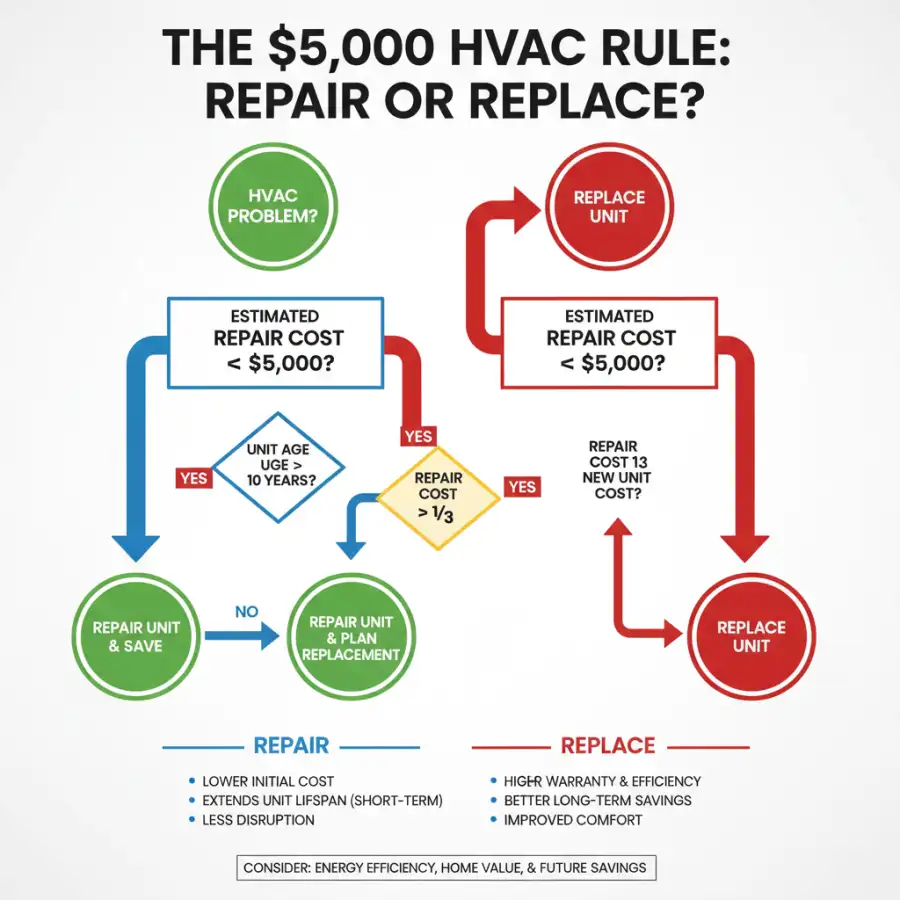
Another common consideration, particularly for homeowners grappling with repair versus replacement decisions, is often dubbed The "$5,000 Rule" – or a similar cost threshold that prompts consideration of a full system upgrade. This guideline suggests that if a repair cost approaches, say, 50% or more of the cost of a new, comparable system, it's often more financially prudent in the long run to invest in a modern, more efficient replacement. However, this is not a strict mandate but a nuanced decision. Factors to consider in depth include: the age of the existing system (systems over 10-15 years often have lower SEER ratings compared to modern units), its Seasonal Energy Efficiency Ratio (SEER) versus the significantly higher ratings of new equipment, the nature and frequency of past repairs, and the potential for future component failures. Regional energy costs, climate demands, and even available tax credits or rebates for high-efficiency systems also heavily influence this decision. A professional contractor will present a detailed cost-benefit analysis, projecting both the immediate and long-term savings of a new system versus the diminishing returns and escalating costs of ongoing repairs. Understanding HVAC installation costs is crucial for making informed decisions on system upgrades.
Furthermore, environmental responsibility plays a significant role in modern HVAC practices, encapsulated by The 3 R's of Refrigerant: Reclaim, Recover, Recycle. These mandates are not merely suggestions; they are legally enforced requirements crucial for protecting the ozone layer and mitigating global warming potential from potent greenhouse gases. Each 'R' has a distinct process:
- Recover: This involves safely removing refrigerant from a system and storing it in a recovery cylinder without necessarily processing it further. It's the first step to prevent venting into the atmosphere.
- Recycle: After recovery, recycling cleans the refrigerant to a certain purity level, typically through oil separation and filtration, making it suitable for reuse in the same system or another system owned by the same technician.
- Reclaim: This is the most stringent process. Reclaimed refrigerant is processed to a nearly new state, meeting strict ARI 700 standards for purity, and can be resold. This requires specialized equipment and facilities.
Professional HVAC technicians are not only certified in these practices (e.g., EPA 608 certification is legally required for anyone handling refrigerants) but are equipped with specialized machinery for each process. Their adherence ensures that harmful refrigerants are not vented into the atmosphere, safeguarding both public health and environmental integrity. Are these just arbitrary numbers and acronyms devised by industry bodies, or do they truly reflect a scientifically-backed framework essential for system longevity, peak performance, and environmental responsibility?
Beyond these, numerous other unspoken "rules" guide a professional's work. These include meticulous load calculations (Manual J for precise cooling/heating load, Manual S for equipment selection, Manual D for duct design) which prevent the costly mistakes of oversizing or undersizing. They also encompass ensuring complete ductwork integrity through proper sealing and insulation for efficient air delivery, and strategically placing thermostats for accurate temperature sensing and system response. The complexities of these calculations and design principles demand expert knowledge, differentiating true professionals from those offering quick, generic solutions.
Hallmarks of Expert HVAC Installation and Service
Identifying an expert HVAC contractor means looking beyond the glossy advertisements and focusing on concrete indicators of professionalism, skill, and ethical practice. At the top of this list are Certification and Licensing. Any reputable HVAC technician will possess state-specific licenses, demonstrating they meet minimum legal and competency standards, which vary by jurisdiction. Beyond that, certifications from industry bodies like NATE (North American Technician Excellence) signify a higher level of specialized knowledge and ongoing training. NATE certifications can include specialties such as Air Conditioning, Heat Pumps, Gas Heating, Oil Heating, and Commercial Refrigeration, proving expertise in specific areas. Comprehensive insurance policies (both liability and worker's compensation) are also absolute non-negotiables; they protect both you and the contractor in case of accidents, property damage, or injury during a job. These credentials aren't just pieces of paper; they represent accountability, a commitment to industry best practices, and a proactive approach to safety and compliance.
When it comes to the financial aspect, Detailed Quotes and Proposals are a crucial sign of transparency and professionalism. A truly professional quote should never be a vague, single-line estimate. Instead, expect an exhaustive, itemized breakdown of all costs for equipment, labor, materials, permits, and any ancillary services (e.g., crane rental, specialized tools). It must clearly define the scope of work, provide precise timelines, outline manufacturer and labor warranties, and specify payment terms. This level of meticulous detail ensures you understand exactly what you're paying for, preventing hidden fees and unpleasant surprises later on. Contrast this with vague, ambiguous estimates that often lead to disputes and unexpected charges. Beware of contractors who offer significantly lower bids without corresponding explanations for the cost difference, as this often indicates corners being cut.
Perhaps one of the most critical, yet often unseen, aspects of professional HVAC work is Proper Sizing and Load Calculation. A common misconception is that a bigger system is always better. In reality, an oversized system will "short cycle" (turn on and off too frequently), leading to inefficient operation, poor dehumidification (leaving your home feeling clammy even when cool), increased wear and tear on components, and higher energy bills. Conversely, an undersized system will struggle to maintain comfortable temperatures, especially during peak demand, constantly running and never quite catching up. Professionals use sophisticated software and adhere to industry-standard calculations (like ACCA Manual J for heating and cooling loads, Manual S for equipment selection, and Manual D for duct design) to precisely match the system's capacity to your home's unique thermal characteristics. This involves analyzing factors like climate zone, insulation levels, window efficiency, home orientation, internal heat gains from appliances, and even the number of occupants. A contractor who doesn't perform these thorough calculations or attempts a one-size-fits-all approach is a significant red flag that will cost you in the long run.
Finally, Quality Workmanship and Attention to Detail are evident in every aspect of the finished product. Look for meticulously organized and correctly wired electrical connections, perfectly sealed and insulated ductwork (critical for preventing air leaks, often using mastic sealant or foil-backed tape, not just duct tape), secure and vibration-free equipment mounting, and strict adherence to all manufacturer installation specifications. Precise refrigerant charging, often measured by superheat for fixed-orifice systems and subcooling for TXV systems, is a technical detail only expert technicians manage correctly. A truly professional contractor will also maintain a clean and orderly workspace, demonstrating respect for the homeowner's property and commitment to a professional finish. Beyond the basic service, what truly distinguishes a top-tier HVAC professional from a basic technician, and how can homeowners discern this difference? It's often this meticulous attention to detail and a commitment to doing things right the first time. When you're finding reliable AC contractors, these are the specific markers of expertise. Furthermore, Communication and Transparency are key. A professional contractor maintains proactive and clear communication throughout the entire process, from the initial consultation and answering all your questions to providing regular updates and post-service follow-up. They actively listen to client concerns, provide honest assessments, and set realistic expectations regarding timelines, costs, and system performance.

What this means for you
Choosing a truly professional HVAC contractor is not merely about ticking boxes on a checklist; it's about investing in a cascade of benefits that directly impact your daily life and your financial well-being over the long haul. The most immediate and tangible advantage is improved comfort and efficiency. A professionally installed and meticulously maintained system will perform optimally, meaning precisely controlled indoor temperatures across all zones of your home, optimal humidity levels that prevent clamminess and inhibit mold growth, and a significant reduction in energy consumption due to maximized system efficiency. This translates directly into noticeably lower utility bills month after month, putting more money back in your pocket while enjoying a perfectly conditioned living space.
Beyond immediate comfort, you gain System Longevity and Reliability. When every component is correctly installed, meticulously balanced, and regularly serviced by experts, your HVAC system is far less prone to unexpected breakdowns and premature wear. This significantly extends the lifespan of your valuable equipment, delaying costly replacements and ensuring your investment continues to provide value for its entire expected life cycle. You won't be left scrambling for emergency repairs during the hottest days of summer or the coldest nights of winter, enduring uncomfortable periods and incurring exorbitant emergency service fees.
Crucially, professional HVAC work also guarantees Safety and Compliance. Strict adherence to local building codes, safety regulations (e.g., electrical, gas line, ventilation, refrigerant handling), and environmental standards is paramount. This actively prevents potential hazards such as carbon monoxide leaks from furnaces, electrical fires due to faulty wiring, or the improper release of environmentally damaging refrigerants. A professional ensures your system operates efficiently, legally, and safely, protecting your property, your family, and the environment. After all your careful consideration, what specific, tangible benefits can you expect from choosing the right HVAC partner?
Ultimately, the culmination of these benefits is Peace of Mind. Knowing that your home's most vital climate control system is in the hands of capable, trustworthy professionals allows you to relax and enjoy your home without the constant worry of unexpected failures, escalating utility costs, or the stress of dealing with subpar service. It's the invaluable confidence that comes from a job done right, protecting your family's comfort, health, and financial security for the foreseeable future.
Navigating Common Installation Pitfalls and Poor Practices
Even with the best intentions, homeowners can sometimes fall victim to common installation pitfalls or poor practices from less-than-professional contractors. The consequences of an incorrect HVAC installation are far-reaching and often insidious, revealing themselves long after the technicians have left. Industry studies and anecdotal evidence suggest that a significant percentage of HVAC installations (some estimates ranging from 50% to even 90% in certain regions) suffer from at least one major defect. These defects lead to chronic short cycling, where the system turns on and off too frequently. This often happens with oversized units, leading to uneven heating or cooling zones, excessive wear and tear on components like the compressor, and significantly higher energy consumption because the system never runs long enough to achieve optimal efficiency or proper dehumidification. Imagine one room being an oven while another remains chilly; that's a classic sign of poor installation.
Other specific, technical examples of poor practices include:
- Incorrect Sizing: As mentioned, an oversized unit short cycles, leading to poor dehumidification and increased wear. An undersized unit constantly runs but fails to reach or maintain desired temperatures, especially during peak demand, wasting energy and providing inadequate comfort.
- Shoddy or Leaky Ductwork: Ductwork serves as the circulatory system of your HVAC. If it's not properly sealed and insulated (using mastic sealant and appropriate tapes, not just standard duct tape), conditioned air escapes into unconditioned spaces like attics, crawl spaces, or wall cavities. The Department of Energy estimates that compromised ducts can lose 20-30% of conditioned air before it ever reaches living spaces, dramatically reducing efficiency and wasting vast amounts of energy.
- Improper Refrigerant Charge: This is arguably one of the most common and damaging errors. An undercharged system won't cool effectively, leading to lower efficiency, higher energy bills, and ultimately compressor damage due to lack of lubrication. Conversely, an overcharged system creates excessively high head pressure, straining the compressor, reducing its lifespan, and also compromising efficiency. Proper charge requires precise measurement using gauges and superheat/subcooling calculations.
- Cutting Corners on Safety: This can manifest in numerous ways: neglecting proper combustion air supply for furnaces, incorrect flue venting that can lead to carbon monoxide poisoning, inadequate electrical protection (e.g., wrong fuse size, improper wiring) creating fire hazards, or failing to install drain pans and overflow switches for condensate lines, which can result in costly water damage and mold growth.
How can you definitively tell if the "bargain" installation you initially received is actually costing you a fortune in hidden inefficiencies, recurrent repairs, and compromised comfort over the long run? Homeowners should be vigilant for signs of a bad installation after the fact: persistent strange noises (hissing, banging, whistling, gurgling from refrigerant lines), unexplained and significant spikes in utility bills despite moderate usage, inconsistent or inadequate heating/cooling despite recent service, condensate leaks visible around the indoor unit, or visible damage/disorder around the installed unit. These are often indicators that the system is not operating as intended due to installation errors. Being able to spot these issues is critical, both during and immediately after installation, allowing you to address them before they escalate into major problems. Choosing the best HVAC company often involves a deep understanding of these common installation pitfalls to ensure they are avoided.
Risks, Trade-offs, and Blind Spots
Navigating the HVAC landscape inevitably involves a series of decisions, each carrying its own set of risks and trade-offs. Homeowners, often faced with complex technical jargon and varying price points, can fall prey to several common blind spots.
One of the most prevalent pitfalls homeowners encounter is Choosing the Cheapest Option. While an initial low bid might seem appealing for immediate budget relief, it almost invariably comes with significant long-term financial drain. A low bid often correlates with compromised materials, inexperienced or uncertified labor, skipped essential steps (like comprehensive load calculations or proper permitting), and a lack of proper insurance or warranty backing. This combination inevitably results in poor system performance, frequent breakdowns, higher operating costs due to inefficiency, and a significantly reduced lifespan for the system, ultimately costing far more than a quality installation. The trade-off here is clear: sacrificing upfront cost for enduring quality, reliability, and true value.
Another common blind spot is Ignoring Red Flags that appear during the selection process. In the hustle of getting a new system installed or an old one repaired, homeowners might overlook critical warning signs due to urgency, perceived trust, or simply a lack of awareness. These red flags include a contractor lacking proper licenses or adequate insurance documentation, providing vague or incomplete quotes that lack itemized details, pressuring for immediate decisions or large upfront payments, offering cash-only deals, or being unable to supply credible, verifiable references. These are not minor issues; they are indicators of potential fraud, incompetence, or a blatant disregard for safety and legal standards. Such oversights can lead to severe consequences, from unsafe installations to non-existent warranties and difficult legal recourse. In the complex pursuit of a comfortable, safe, and efficient home, what critical details are most frequently overlooked by homeowners when selecting an HVAC partner, and how can these blind spots be addressed?
The temptation of DIY HVAC work beyond basic filter changes is another significant risk. This section should highlight the significant dangers and inherent complexities involved. Handling refrigerants is illegal without EPA 608 certification due to environmental regulations and personal safety risks (e.g., frostbite, chemical burns). Improper electrical connections can lead to severe fire hazards or electrocution. Incorrect gas line installations pose an explosion risk. Miscalibrating system components, even minor ones, can drastically reduce efficiency and cause premature failure. Such attempts almost certainly void manufacturer warranties and can lead to far more costly professional repairs or replacements when problems inevitably arise. The perceived savings rarely outweigh the inherent dangers, technical challenges, and potential for irreparable damage.
Finally, Focusing Only on Brand can be a critical blind spot. While reputable HVAC brands like Carrier, Trane, Lennox, or Goodman produce excellent, high-quality equipment, even the best unit can perform poorly or fail prematurely if installed incorrectly. The skill, experience, certification, and integrity of the installer are often more critical than the brand name itself. A premium brand installed by a mediocre contractor will likely underperform and have a shorter lifespan than a mid-range brand installed by a highly skilled, professional technician. Homeowners often mistakenly believe that selecting a top-tier brand alone guarantees quality and performance, overlooking the absolutely critical role of meticulous, professional installation and system balancing. Always prioritize the contractor's reputation, verifiable expertise, and track record alongside the quality of the equipment.
Main Points
In the complex world of home climate control, the difference between a comfortable, energy-efficient home and one plagued by issues often comes down to the professionalism and expertise of your HVAC contractor. Making an informed decision requires not just a checklist, but a deep understanding of industry standards and the ability to recognize the hallmarks of expert service.
Key Takeaways:
- Professionalism in HVAC is non-negotiable for achieving long-term efficiency, consistent comfort, and robust safety in your home.
- A deep understanding of key industry guidelines, such as the 2-foot rule for unit clearance, the "$5,000 rule" for repair vs. replacement decisions, and the 3 R's of refrigerant handling, is crucial for informed decision-making.
- Always prioritize contractors who are fully licensed, hold relevant certifications (like NATE), are adequately insured, and provide transparent, meticulously detailed proposals.
- Signs of true expertise include meticulous workmanship, accurate load calculations (Manual J, S, D) to perfectly size your system, and a clear commitment to manufacturer specifications and best practices.
- Be highly vigilant for red flags such as unusually low bids, vague or incomplete contracts, absence of verifiable references, or any pressure tactics; these often indicate substandard practices and potential future problems.
- Recognize that incorrect installations are unfortunately common in the industry and can lead to substantial hidden costs, including higher utility bills, premature equipment failure, and significant safety hazards.
- When evaluating HVAC services, prioritize the long-term value, system reliability, and your ultimate peace of mind over any immediate, tempting, but often misleading, cost savings.
When it comes to your home's comfort, your family's safety, and your long-term financial well-being, settling for anything less than a true professional in the HVAC field is a significant risk not worth taking. Empower yourself with this knowledge, choose your contractor wisely, and invest in the lasting benefits of a perfectly installed and meticulously maintained HVAC system that will serve your home reliably for many years to come.