

What's Included in an HVAC System Installation? A Comprehensive Guide
Everything you need to know about HVAC installation costs and components.
Are you tired of battling extreme temperatures in your home? A new HVAC system promises comfort, but understanding what's included in the installation process can feel overwhelming.
From choosing the right equipment to navigating the complexities of ductwork, this guide breaks down every aspect of an HVAC installation, ensuring you're well-informed.
Ready to take control of your home's climate? Let's explore everything involved in an HVAC system installation.
Installing a new HVAC (Heating, Ventilation, and Air Conditioning) system is a big investment in your home. Many homeowners wonder exactly what is included in an HVAC system installation. This guide will show you the parts, labor, and costs for a new HVAC system. It helps you make good decisions and avoid extra expenses. Understanding the details is key, whether you are upgrading or installing for the first time.
Quick navigation
What to Expect in an HVAC Installation
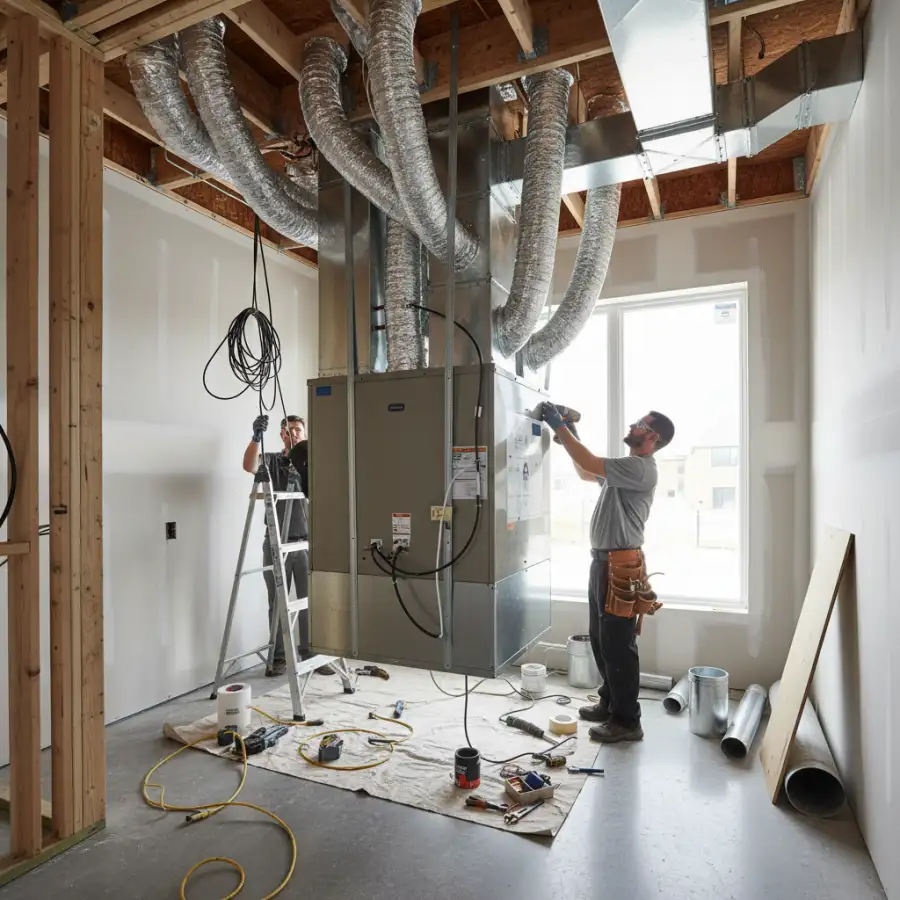
An HVAC installation has several key steps. First, a professional HVAC contractor will check your home's size, layout, and insulation. This helps them find the right system size and type. Then, the contractor removes the old system, gets the site ready, and installs the new equipment. This includes indoor and outdoor units, ductwork if needed, and electrical and gas connections. Finally, the contractor tests the system to make sure it works and gives you instructions and maintenance advice.
What challenges can you expect during an HVAC installation? The project's difficulty is often underestimated. For example, replacing or changing ductwork can add to the project's time and cost. Also, getting electrical and gas connections right needs expert help, which increases labor costs. Unexpected issues, like asbestos removal, can also come up, adding more work and costs. All these things are considered in the initial assessment and are important for a detailed installation quote.
Components of an HVAC System
An HVAC system has several key parts that work together to control your home's temperature and air quality. These parts include the furnace or air handler, the air conditioner or heat pump, the evaporator coil, the condenser coil, and the thermostat. The furnace or air handler heats the air, while the air conditioner or heat pump cools it. The evaporator coil, inside, takes heat from the air, and the condenser coil, outside, releases the heat. The thermostat is the control center, letting you set your desired temperature.
Do you know how different HVAC system types impact performance and cost? Besides these basic parts, you can choose from different HVAC systems. A split system is common and separates the heating and cooling parts. A packaged system combines all parts into one unit, often used in smaller homes. Heat pumps provide both heating and cooling, offering energy efficiency in mild climates. Each type has pros and cons for installation, energy use, and initial costs. Your contractor can help you choose the best system for your needs and budget.
The Role of Ductwork
Ductwork is a critical part of an HVAC system. It distributes conditioned air throughout your home. The duct system has supply ducts that carry air from the HVAC unit to the vents in each room. It also has return ducts that bring air back to the unit for conditioning. Good ductwork design and installation are essential for the system to work efficiently. Leaks, poor insulation, or the wrong duct size can reduce the system's efficiency, leading to higher energy bills and uneven temperatures.
What are the signs of ductwork problems, and how can they be fixed? If your home has uneven heating and cooling, high energy bills, or bad indoor air quality, your ductwork could be the problem. Other signs include a musty smell or visible leaks or damage. Fixing ductwork issues often involves sealing leaks, insulating ducts, and making sure the airflow is good. Sometimes, you may need to replace the ductwork. A professional HVAC contractor can check your ductwork and suggest the right solutions.
Labor Costs and Considerations
Labor costs are often a large part of the total HVAC installation cost. These costs change based on the installation's complexity, the contractor's hourly rates, and where you live. Replacing an existing system is usually less expensive than a new installation that needs ductwork changes or work in hard-to-reach areas. Also, the time of year and the contractor's experience can affect labor costs.
How can you ensure you're receiving fair and transparent labor pricing? Get several quotes from different HVAC contractors. Compare not just the total costs but also the breakdown of labor and materials. Ask the contractors to explain the work they will do and how they calculate their labor charges. Check online reviews and ask for references to see the contractors' reputation and the quality of their work. You might get a better price by negotiating with contractors, especially if you have a lower quote.
Permits and Inspections
Most HVAC installations require permits from your local building authorities. These permits ensure the installation follows local building codes and safety rules. The permitting process involves submitting plans, paying fees, and having inspections to check the work. The contractor usually gets the permits, but confirm this as part of your agreement.
What can happen if you do not get the right permits? Not getting permits can lead to fines, delays, and having to redo the work. More importantly, it can make your HVAC system unsafe and not work correctly. Without inspections, there is no guarantee the installation meets safety standards, which could put your home and family at risk. Improper installations can also void your homeowner's insurance or make it hard to sell your home later. Always make sure permits and inspections are part of the installation process.
What this means for you
Understanding the parts of an HVAC installation helps you make good decisions and budget correctly. Knowing the different parts of the installation process, including equipment costs, labor expenses, and possible extra fees for ductwork or permits, helps you avoid unexpected costs. You can ensure a successful and compliant installation by comparing quotes, checking contractor credentials, and making sure you have all necessary permits. This helps you get the most from your investment.
When you have a detailed understanding of the installation process, you can communicate effectively with contractors. Asking the right questions and understanding the answers will help you feel more confident about your choices. It also gives you a way to negotiate prices and make informed decisions that fit your budget and home's needs. This knowledge can also help in the long run, as it allows you to anticipate potential maintenance needs and understand the factors contributing to your energy bills.
Risks, trade-offs, and blind spots
One possible blind spot is not paying enough attention to ductwork. Bad or inefficient ductwork can reduce your new HVAC system's performance, leading to higher energy costs and uneven temperatures. Another area to watch is the quality of the installation labor. A system that is not installed well, even with good parts, will not work correctly. Choose a contractor with a good reputation and experienced technicians.
Are there any hidden costs that could arise during the process? Hidden costs often come from unexpected issues like asbestos removal, mold cleanup, or the need for electrical upgrades. Inspect your home thoroughly and discuss possible problems with your contractor to reduce surprises. Remember, the cheapest option may not always be the best. Consider long-term energy efficiency, warranties, and the contractor's reputation to make a good decision.
Main points
- An HVAC installation has several key steps: assessment, removal of the old system (if applicable), installation of new components, and system testing.
- The essential components of an HVAC system include the furnace or air handler, air conditioner or heat pump, evaporator coil, condenser coil, and thermostat.
- Ductwork is vital for distributing conditioned air, with issues like leaks and poor insulation affecting performance.
- Labor costs are a significant part of the total installation expense, varying by complexity and location.
- Most installations need permits to meet local building codes and safety standards.
- Choose a qualified contractor by getting multiple quotes, comparing labor and material costs, and checking reviews. Finding reliable HVAC contractors is a key step.
- Assess your home thoroughly and discuss potential issues to avoid hidden costs like asbestos removal or electrical upgrades.
- Prioritize long-term energy efficiency, warranties, and the contractor's reputation when making your decision.
Understanding what's included in an HVAC installation lets you make the right choices for your home's comfort and efficiency. By following the tips in this guide, you can confidently handle the installation process. This ensures a comfortable and energy-efficient home environment. If you want to know more about the cost of installing a new system, check out the cost breakdown. Also, when choosing an HVAC company, consider how to choose the best HVAC company near you.