

How Often Should You Inspect Your Roof? A Comprehensive Guide
Your ultimate resource for roof inspection frequency, understanding the 25% rule, and more.
Your roof is your home's first line of defense against the elements. How often should you check it?
Ignoring your roof could lead to expensive repairs. Regular inspections can help you find problems early.
This guide will show you the recommended inspection schedule. It explains important roofing terms. It also gives you advice to keep your roof in good condition.
Keeping your roof in good shape is important to protect your home and your investment. Regular roof inspections help prevent minor issues from becoming major, expensive problems. This guide explains the best practices for roof inspections. You will understand the best frequency, what to look for, and how to make smart choices about your roof's care. Let's start with the main question: How often should you inspect your roof?
Quick navigation
How Often Should You Inspect Your Roof?
How often you inspect your roof depends on several things. These include the age of your roof, the climate, and the materials used. A general rule is to inspect your roof at least twice a year. The best times are in the spring and fall. These seasons usually show any damage from winter snow or summer storms.
You should also inspect your roof after any major weather event. These include strong winds, hail, or heavy rain. These events can cause damage right away, like missing shingles. They can also cause problems later, like leaks.
For a new roof, regular inspections are even more important. This makes sure it is working as expected. As the roof gets older, you may need to adjust the inspection schedule. Base this on its condition. If you see any signs of wear, increase the inspections. Or, call a professional roofer to check the damage. Did you know regular inspections can make your roof last longer?
The 25% Rule in Roofing
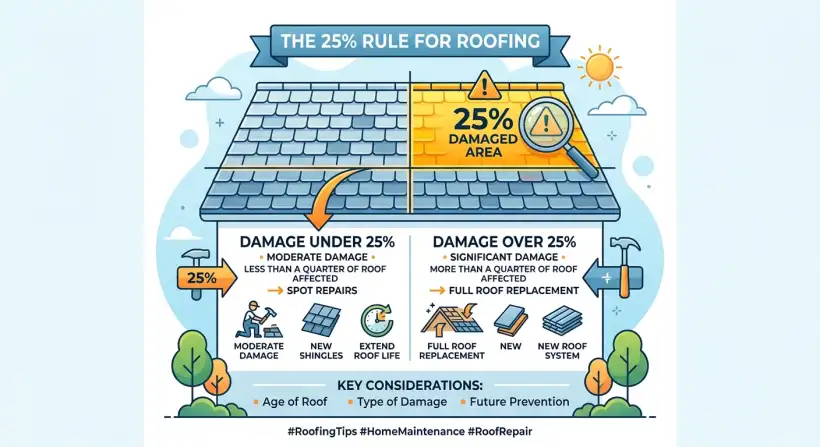
The 25% rule, also called the “substantial damage” rule, applies when a roof is damaged. Insurance companies often use it to decide if they will cover a complete roof replacement. The rule says that if more than 25% of your roof's surface is damaged, the entire roof may be replaced. This rule can change the amount of money you get from your insurance. It also changes the work that is covered.
The 25% rule can be different depending on your insurance policy, your state, and the specific damage. For example, some policies may pay to replace the whole roof if the damage meets the rule. Others may only cover the damaged part. You will likely need a professional to assess the damage. You can read more about roofing materials and construction on Wikipedia.
What to Look for During a Roof Inspection
A thorough roof inspection involves checking several areas of your roof. Here is a checklist:
- Shingles: Look for any missing, cracked, curled, or loose shingles. Also, check for granules in the gutters. These show wear.
- Flashing: Inspect the flashing around chimneys, vents, and skylights. Look for damage or problems. Flashing is important for stopping water leaks.
- Gutters and Downspouts: Make sure gutters and downspouts are clear. They should be working correctly. Clogged gutters can cause water to back up and cause damage.
- Ventilation: Check for good ventilation. This helps prevent moisture and makes your roof last longer.
- Sagging: Look for any sagging in the roof deck. This could mean there are problems with the structure.
For more details, see eco-friendly roofing, a helpful resource.
DIY vs. Professional Roof Inspections
You can do a basic visual inspection yourself. However, a professional roof inspection is recommended. This is especially true for older roofs or after bad weather. A professional roofer has the skills and tools to find problems you might miss.
Here is a comparison:
- DIY Inspection:
- Pros: Cost-effective. You can check it regularly.
- Cons: Limited skills. You can miss hidden damage. There are safety risks.
- Professional Inspection:
- Pros: Thorough assessment. Expert knowledge. Detailed report. Safe.
- Cons: It costs money.
Professional inspections usually include a detailed report with photos. They also include recommendations for repairs or maintenance. Does this sound like a good investment?
Communicating with Your Insurance Adjuster
If you think your roof is damaged and plan to file an insurance claim, talk to your insurance adjuster. Here are some key steps:
- Document Everything: Take photos and videos of any damage.
- Contact Your Insurance Company Promptly: File a claim as soon as possible.
- Prepare for the Inspection: Be there during the inspection. Ask questions.
- Obtain Multiple Quotes: Get quotes from different roofing contractors for the repair or replacement.
Giving detailed documentation and being ready to discuss the damage can speed up the claims process. It helps you get fair compensation. Do you have all the necessary documentation ready?
What this means for you
Understanding how often to inspect your roof, the 25% rule, and how to talk to your insurance adjuster helps you protect your home. Regular roof inspections can catch minor issues before they become major problems. This stops expensive repairs and makes your roof last longer. Knowing the 25% rule can help you understand your insurance coverage. It helps you avoid surprises if damage happens. Talking to your insurance adjuster clearly ensures you get the benefits you deserve. This can save you time and money.
These actions can give you peace of mind. You know you are protecting your home and your investment.
Risks, trade-offs, and blind spots
One risk is not inspecting your roof regularly. This allows minor issues to become severe and costly problems. These include water damage, structural issues, and mold. The trade-offs may involve the cost of professional inspections versus the cost of major repairs. They could also involve replacing the roof early. Blind spots often include not knowing the age of your roof or the impact of weather. This can lead to unexpected damage and claim denials.
Homeowners can reduce these risks by being proactive. They can make informed decisions about their roof maintenance.
Main points
- Inspect your roof at least twice a year: Aim to inspect your roof in the spring and fall.
- The 25% rule: Understand how this rule affects insurance coverage for roof replacement.
- Check for missing, cracked, or loose shingles: Look for any signs of wear.
- Inspect flashing around chimneys, vents, and skylights: Look for any signs of damage or deterioration.
- Ensure gutters and downspouts are clear: Clogged gutters can lead to water backup and damage.
- Consider professional inspections: For thorough assessment and detailed reports.
- Document everything when filing an insurance claim: Gather photos and videos.
- Communicate clearly with your insurance adjuster: Helps speed up the claims process.
Follow these guidelines to protect your roof and your home. Make sure it lasts and keeps its value. Schedule a roof inspection today to keep your home safe.