

How to Detect Roof Leaks: A Step-by-Step Guide
Protecting Your Home from Water Damage
Is that drip, drip, drip a sign of trouble? Roof leaks can start small, but if you do not check them, they can cause a lot of damage to your home.
Find leaks early. Knowing how to identify the signs of a roof leak can save you headaches and money later.
This guide will show you the steps to find roof leaks. It helps you protect your home and have peace of mind.
Dealing with a leaky roof is not fun. It can cause water damage, mold, and other problems. The good news is, with some knowledge, you can find roof leaks early. This guide gives you the tools and techniques you need to find and fix roof leaks. We will look at common causes, how to inspect, and what to do when you find the problem.
Quick navigation
Recognizing the Signs of a Roof Leak
You can often spot early signs of a roof leak just by looking at your home. Are there water stains on your ceilings or walls? Do you notice musty smells, especially after rain? These are signs that you need to check further. What are the key signs?
Here is a list of the most common signs:
- Water stains on ceilings and walls: This is a clear sign. Look for discolored spots. They can be light brown to dark. Look near the top of walls or around lights.
- Dripping water: This is a worrying sign. If you see water dripping, you have a leak that needs quick attention.
- Mold and mildew growth: Mold and mildew grow in damp places. If you see them on your ceilings, walls, or in your attic, it could be from a roof leak.
- Peeling paint or wallpaper: Moisture can make paint and wallpaper bubble, peel, or crack.
- Musty odors: A musty smell, especially after rain, often means moisture is trapped in your home.
- Damaged or missing shingles: Look at your roof from the ground. You may see missing or damaged shingles. These can let water in.
Are you starting to see any of these signs in your house?
Inside Inspection: Where to Start
The first step in finding a roof leak is to check the inside of your home. Check the attic, if you have one, and the ceilings of the top floor. This is where you will likely find the first signs of water damage. But where should you look?
Here is how to check:
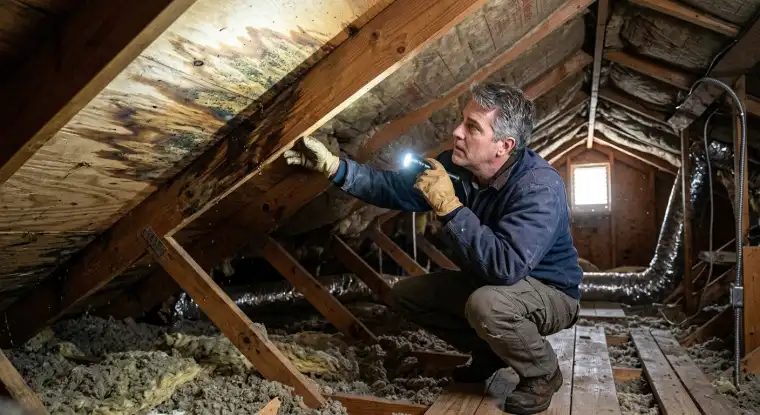
- Safety first: Before going into your attic, make sure it is safe. Make sure the floorboards are strong. Make sure there are no wires showing. Use a flashlight. Wear clothes that cover your arms and legs. Wear shoes that cover your toes.
- Inspect the attic: If you have an attic, this is a good place to find leaks. Look for water stains on the rafters, decking, and insulation. Check around chimneys, vents, and any other parts that stick out. A flashlight can help.
- Check the ceilings: Look at the ceilings of your top floor rooms. Look for water stains, discoloration, or peeling paint. Check around lights, vents, and any other parts that go through the roof.
- Feel for moisture: Use your hands to feel for dampness on the ceiling and walls. Check the areas where you think there might be a leak.
- Document your findings: Take photos or write notes of any areas that concern you. This will help you later when you try to find the leak.
Did you know that attics are good places to spot early signs of water damage?
Outside Inspection: A Closer Look at Your Roof
Once you have checked inside, it is time to check your roof. You can see a lot by looking at your roof from the ground. You may need to get closer to the roof to check it more carefully. Safety is important. If you do not feel safe working on a roof, it is best to hire a professional. But what should you look for?
Here is how to check your roof:
- Visual inspection from the ground: Start by looking at your roof from the ground. Use binoculars if you need to. Look for missing, damaged, or curled shingles. Note any areas where the shingles seem to be lifting or bent.
- Inspect the flashing: Flashing is the metal used to seal around chimneys, vents, and other parts of the roof. Check for rust, cracks, or gaps in the flashing.
- Look at the gutters and downspouts: Make sure your gutters and downspouts are clean and free of leaves. Clogged gutters can cause water to back up and get under the shingles.
- Check for moss or algae: Moss or algae can show where water is collecting. This can lead to leaks.
- Professional assistance: If you cannot safely check your roof, it is best to call a professional roofing contractor.
Can you see the condition of your roof from the ground?
Common Leak Points to Investigate
A roof can leak anywhere, but some areas have more problems. Knowing these common leak points can help you focus your inspection. You might find the leak faster. Where are these weak spots?
- Around chimneys: The flashing around your chimney is a common leak point. Cracks or gaps in the flashing can let water in.
- Around vents: Vents for plumbing and other things also have flashing. This can be a source of leaks.
- In valleys: Valleys are where two roof slopes meet. Water collects in valleys. If the shingles are not installed or sealed well, leaks can happen.
- Around skylights: Skylights are another common source of leaks. The seals around the skylight can wear out. This lets water in.
- Under shingles: Sometimes, the shingles themselves can be the problem. Damaged, missing, or badly installed shingles can let water in.
- At the eaves: The eaves, or edges of the roof, can leak. This is especially true if the gutters are clogged.
Have you checked these important areas on your roof?
Testing Methods to Pinpoint the Leak
Once you have found problem areas, you may need to do tests to find the exact source of the leak. This can be tricky. Water can travel a long way before you see it inside your home. What are the best ways to test?
- The water test: This is a simple method. Have someone go into the attic or inside your home. They should watch for water while you (safely) pour water over the areas you think are leaking. Start with a small amount of water. Add more water slowly.
- The hose test: This is like the water test, but you use a garden hose. Start with a gentle stream of water. Point it at the area you think is leaking. Have someone inside watch for water.
- Dye testing: Use a colored dye in the water you pour on the roof. The dye helps you see where the water goes. This helps you find the leak.
- Professional inspection: If you cannot find the leak, or if you do not feel safe doing these tests, call a professional roofer. They have experience and tools to find and fix roof leaks correctly.
Are you ready to do the tests to find the leak's exact source?
What this means for you
Finding roof leaks is about more than just convenience. It is about protecting your home and your investment. Ignoring a leak can cause many problems. What should you remember?
Find and fix leaks early. The sooner you find and fix a leak, the less damage it will cause. Also, a leaking roof can cause mold and mildew to grow. These can cause health problems and cost a lot to remove. Water damage can harm your home's structure. This can lead to costly repairs. A well-kept roof adds to the value of your home. Fixing leaks shows you are a responsible homeowner. It can be a selling point if you sell your home.
Are you willing to protect your home and your investment by fixing any roof leaks quickly?
Risks, trade-offs, and blind spots
This guide gives you helpful information. It is important to know about the risks, trade-offs, and blind spots of finding roof leaks. What are some things to think about?
A big risk is falling. Working on a roof can be dangerous, especially if it is wet or icy. Always be safe and use safety equipment. A trade-off is the time and effort it takes to check your roof. Checking your roof carefully takes time. The cost of not doing it can be much greater. A blind spot is hidden leaks. Water can travel under the roof before you see it inside your home. This can make it hard to find the leak. You may need help from a professional.
Have you thought about the risks and trade-offs before checking your roof?
Main points
Finding and fixing roof leaks is important for home care. By following these steps and knowing the risks, you can protect your home and your investment. What are the key points from this guide?
- Inspect Regularly: Check your roof and inside spaces, like attics, at least twice a year and after bad weather.
- Look for the Signs: Watch for water stains, mold, mildew, and other signs of a leak.
- Check the Common Leak Points: Pay close attention to areas around chimneys, vents, skylights, and valleys.
- Use Testing Methods: Do water tests or hose tests to find the source of a leak.
- Prioritize Safety: Always be safe when working on or around your roof. Use the right equipment.
- Consider Professional Help: Call a professional roofer if you are not sure about any part of the inspection or repair.
- Act Quickly: Fix any leaks fast to prevent damage.
- Maintain Your Roof: Keep your roof clean of leaves and make sure water drains well. This stops water damage. You can also explore eco-friendly roofing solutions, as discussed in this article: eco-friendly roofing.
Follow these steps and be active. You can find and fix roof leaks. This keeps your home safe and dry. For more information on roof care and repair, you can read Wikipedia.
Protect your home today. Schedule a roof inspection or fix any problems to stop costly damage. For more reading, see this article for tips on eco-friendly roofing solutions.