

Repair vs. Replacement: When Does It Make Sense to Fix Something?
Making the right financial call when faced with a broken appliance or car.
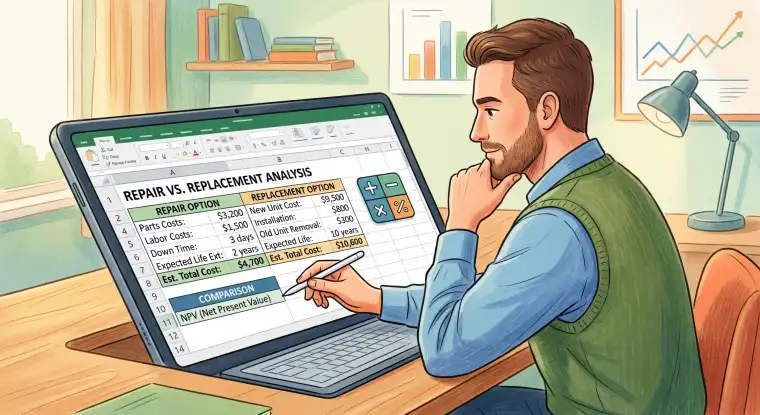
Your washing machine stops spinning, your car makes a terrible noise, or your roof starts to leak. Suddenly, you're faced with a tough choice: repair or replace?
Deciding whether to fix something or buy a new one involves more than just a gut feeling; it’s a financial puzzle.
This guide will help you navigate this decision, ensuring you make the most cost-effective choice and avoid throwing money down the drain.
You have a broken appliance, a car that needs fixing, or something in your home that’s failing. You may feel frustrated. But the question is: should you repair or replace? It’s a common problem, and the answer is not always easy. It depends on several things, like the item's age, the repair cost, and its overall value. Making the right decision can save you money and prevent extra costs. This guide explains the key points and gives you a framework for making informed choices.
This article helps you decide when to repair something and when to replace it. We'll look at the financial aspects, the long-term value, and how practical each choice is. This helps you make the best decision for your situation.
Quick navigation
The 50% Rule and Other Rules of Thumb
The "50% rule" is a common guideline for deciding whether to repair or replace something. This rule says that if the repair cost is more than half the price of a new item, you should replace it. This is a good starting point, but it's not the only thing to consider. For example, if your roof needs repair, the cost can be high. However, a full roof replacement can be even more expensive, depending on the damage. Learn more about factors that increase roof prices here.
Other rules of thumb include:
- Age of the Item: Think about how old the item is. An older item is more likely to need more repairs soon.
- Frequency of Repairs: If you've been repairing the item often, it may be time to replace it.
- Availability of Parts: See if replacement parts are easy to find and affordable.
These rules of thumb give you a quick way to assess the situation. But you often need to look closely at the specific details.
Factors to Consider: Beyond the Initial Cost
There are several things to think about besides the initial cost when making your decision. Are you thinking about all of them?
- The Item's Lifespan: How long will the new item last compared to the repaired item?
- Energy Efficiency: Newer models are often more energy efficient, which saves money in the long run.
- Warranty: A new item usually has a warranty, which gives you peace of mind.
- Technological Advancements: Newer models might have better features and performance.
Think about the long-term cost. While the initial repair might seem cheaper, a new, more efficient model could save you money over time. It's important to evaluate these things to make a fully informed decision.
Evaluating the Repair: Is it Worth It?
Before you decide, it's important to understand the repair costs. Is the repair quote reasonable? Does the repair offer a long-term solution?
- Get Multiple Quotes: Get quotes from different repair shops or service providers to compare prices.
- Assess the Reliability of the Repair: Ask about the warranty on the repair work.
- Consider the Item's Overall Condition: Are there other issues that might need future repairs?
Carefully evaluating the repair helps you avoid spending money on a temporary fix that will need to be fixed again soon.
When Replacement is the Smarter Choice
In some situations, replacing an item is the better choice. Are you aware of those situations?
- The Repair Cost Exceeds 50% of Replacement Cost: As mentioned earlier, this is a strong sign that you should replace the item.
- The Item Is Near the End of Its Expected Lifespan: It’s wise to replace an item if you've used it for a long time.
- The Item Is No Longer Efficient or Meets Current Needs: Newer models might offer better performance and features.
- The Item Has Frequent Breakdowns: Constant repairs show there's an underlying problem that replacement may solve.
Replacing an item can be the better option for long-term savings and convenience.
What this means for you
Understanding the repair-versus-replacement problem is important for anyone who owns property, a car, or any household item. Making informed decisions can save you money, time, and stress. If you're a homeowner, knowing when to replace your roof, for example, could prevent more damage and financial problems. It's about being proactive and making smart financial decisions to protect your investments.
The goal is to make a choice that fits your financial goals and lifestyle. By considering the factors discussed here, you can approach these decisions with confidence. This helps you make the most beneficial choice for your situation.
Risks, trade-offs, and blind spots
There are potential problems when deciding whether to repair or replace something. What are you missing?
- Overlooking Hidden Costs: Not considering future repairs can cause financial problems.
- Ignoring Opportunity Cost: Spending money on repairs could mean missing other investment opportunities.
- Emotional Attachment: Sometimes, feelings can cloud your judgment, leading to bad choices.
Knowing these risks helps you make more objective decisions and avoid possible negative outcomes. Always think about the long-term impact on your finances and well-being.
Another blind spot is the environmental impact. If possible, repairing an item is usually better for the environment than replacing it. Consider this when making your decision.
Main points
Here’s a summary of the key points to help you decide whether to repair or replace:
- The 50% Rule: If a repair costs more than half the replacement cost, think about replacing the item.
- Age Matters: Older items often have more problems and shorter lifespans.
- Factor in Long-Term Costs: Consider energy efficiency and potential savings with a new model.
- Evaluate the Repair Thoroughly: Get multiple quotes and assess how reliable the repair is.
- Consider the Item's Lifespan: Decide how long the new item will last compared to the repaired item.
- Assess the Availability of Parts: See if replacement parts are easy to find and affordable.
- Consider Technological Advancements: Newer models may have better features and performance.
Use these principles to confidently decide whether to repair or replace. Make the most economical and practical choice for your needs. Always prioritize your budget and think about the long-term value.
Ready to make smart decisions? Use these guidelines to evaluate your appliances and vehicles. Start saving money today!