

How Can I Reduce My Electricity Bill? 10 Proven Ways to Save Energy at Home
Master your home energy consumption and stop overpaying for cooling and power with these expert-backed strategies.
Are you tired of opening your electricity bill every month only to find an unexpectedly high charge that puts a dent in your budget?
You see this often, and the good news is that most of that energy waste is entirely preventable with a few tactical shifts in your home maintenance.
By understanding how to reduce your electricity bill through smarter climate control and appliance management, you can reclaim hundreds of dollars annually starting today.
We often treat energy consumption as a fixed cost of living, but in reality, your home functions like a complex system. When that system is misconfigured—specifically regarding HVAC efficiency and phantom power loads—your utility company profits from your oversight. If you have been wondering "how can I reduce my electricity bill," you must move beyond generic advice like "turn off the lights" and look into the mechanics of thermal efficiency and load management.
This guide will strip away the myths of energy saving and provide a clear, actionable roadmap to optimizing your home for maximum efficiency. Whether you are dealing with an aging AC unit or simply want to tighten up your household habits, these steps are designed to yield immediate results.
Quick Navigation
The Science of Cooling Efficiency
The single largest consumer of electricity in most modern homes—especially during summer—is the HVAC system. If you want to know how can I reduce my electricity bill, this is where you start. The cooling process isn't just about blowing cold air; it is about thermodynamics. Your air conditioner works by moving heat from inside your living space to the outside. If your home isn't sealed properly, you are essentially fighting a losing battle against the laws of physics.
Consider the "Envelope" of your home. Any crack in a window, gap under a door, or poorly insulated attic acts as a doorway for heat to enter. When heat enters, your thermostat detects the rise in temperature and forces the compressor to run longer and harder. This leads to increased wear and tear, and more importantly, a spike in your energy consumption.
Before you even look at your utility settings, look at your home's integrity. Are your windows double-paned? Is your weather stripping intact? Does your attic have proper insulation? These are structural investments that pay for themselves in electricity savings over time. For those considering upgrades, understanding the hvac installation cost breakdown is essential to ensure you are getting the efficiency rating you actually need for your home's square footage.
Furthermore, the age of your equipment plays a role. An older AC unit with a low SEER (Seasonal Energy Efficiency Ratio) rating will always consume more power than a modern unit. If your system is over 12-15 years old, it is likely operating at significantly lower efficiency than modern regulations require. While the upfront cost is a hurdle, the monthly savings on your electricity bill can be substantial, often offsetting the cost of a high-efficiency system within a few seasons.
Insider Secret: Many homeowners make the mistake of setting their thermostat significantly lower than needed when they first arrive home, thinking it will cool the house faster. It won't. It just forces the system to work harder. Set your thermostat to a comfortable, consistent temperature and leave it there.
10 Ways to Save Electricity at Home
Reducing your bill is a combination of large-scale upgrades and daily discipline. Here are ten practical ways to cut costs immediately.
| Strategy | Ease of Implementation | Impact Level | Estimated Savings |
|---|---|---|---|
| Switch to LED Lighting | Very High | Moderate | 5-10% |
| Install Programmable Thermostat | High | Very High | 15-25% |
| Seal Air Leaks | Moderate | High | 10-20% |
| Wash Clothes in Cold Water | Very High | Moderate | 5-10% |
| Maintain AC Filters | Very High | High | 5-15% |
1. Upgrade to LED Bulbs: It is the oldest trick in the book for a reason. LEDs use 75% less energy and last 25 times longer than incandescent lighting. It is a one-time change that eliminates a constant, quiet drain on your power.
2. Programmable Thermostats: Why cool an empty house? A smart thermostat learns your schedule and adjusts the temperature automatically. Saving a few degrees when you are away can save you hundreds annually.
3. The "Cold Wash" Rule: Modern laundry detergents are formulated to work in cold water. Heating water accounts for 90% of the energy used by a washing machine. Switching to cold saves the energy used for the heating element entirely.
4. Unplug Phantom Loads: Electronics like game consoles, TVs, and chargers consume energy even when turned off (standby power). Use power strips with on/off switches to cut them off completely.
5. Use Ceiling Fans Correctly: Ceiling fans don't cool the air; they cool you via the wind-chill effect. Only use them when you are in the room. In summer, ensure they are spinning counter-clockwise to push air down.
6. Optimize Your Refrigerator: Keep your fridge between 37-40°F and your freezer at 0°F. Ensure the door seals are airtight; a loose seal is one of the most common causes of hidden energy waste.
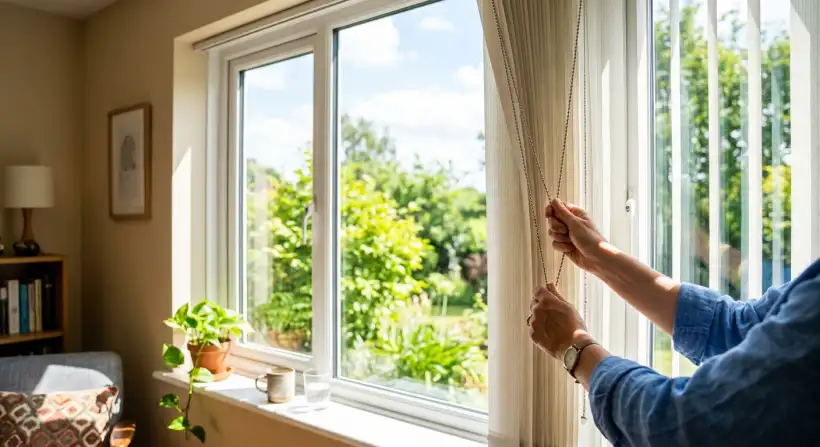
7. Use Curtains Strategically: During the hottest part of the day, close your blinds or heavy curtains on windows facing the sun. This prevents heat gain and keeps the internal temperature stable.
8. Dry Clothes Naturally: The clothes dryer is a massive energy hog. On sunny days, use a drying rack. It saves electricity and extends the life of your fabrics.
9. Full Loads Only: Only run your dishwasher and washing machine when you have a full load. This reduces the number of cycles you run, which directly correlates to your monthly consumption.
10. Regular HVAC Maintenance: A dirty evaporator coil or a clogged filter forces your AC to run significantly longer to achieve the same result. You need to prioritize finding reliable ac contractors near me to schedule annual inspections.
Why Professional Upkeep Matters
You can change your habits all you want, but if your hardware is failing, you are still wasting money. Many homeowners put off HVAC maintenance until the unit dies. This is a false economy. A system that is low on refrigerant, dirty, or has a failing capacitor will draw much more amperage than a healthy unit.
When you look for an hvac company near me how to choose best, look for providers who offer comprehensive service packages. A good technician doesn't just "check the air." They clean the condenser coils, check the blower motor health, measure the refrigerant levels, and tighten electrical connections. These proactive steps prevent catastrophic failure and ensure the unit operates at peak efficiency.
It is worth noting that modern systems are highly sensitive. A sensor that is slightly miscalibrated can lead to short-cycling, where the unit turns on and off rapidly. This is one of the most destructive behaviors for a compressor and is a major energy burner. Professional calibration ensures your unit starts and stops according to the manufacturer's precise engineering.
Insider Secret: Most homeowners forget to check their outdoor condenser unit. If the fins are blocked by dust, leaves, or yard debris, the system cannot dissipate heat effectively. Keep a two-foot clearance around the unit and wash the fins with a gentle stream from a garden hose once a season.
Risks, trade-offs, and blind spots
While saving energy is a positive goal, you must avoid the trap of "efficiency at all costs." For instance, sealing your home completely airtight without adequate ventilation can lead to indoor air quality issues. Modern homes rely on a calculated exchange of air. If you seal every nook and cranny, you might trap moisture, leading to mold growth, which is a much costlier problem than a high utility bill.
Another common blind spot is the "comfort vs. cost" trade-off. Some people set their thermostats to extreme temperatures to save money, creating a home environment that is unhealthy or stressful for pets, children, or elderly residents. Energy efficiency should never come at the expense of your health or safety. Always aim for a "moderate efficiency" point where you feel comfortable, but the system isn't running constantly.
Be skeptical of "energy-saving devices" sold online that claim to plug into your wall and lower your bill. These are almost always scams. There is no magic box that can override the laws of physics. Real efficiency comes from structural changes and behavior, not from cheap plastic gadgets.
What this means for you
By implementing these strategies, you are moving from a passive consumer to an active manager of your home's resources. This shift will likely result in a 15% to 30% reduction in your energy usage within the first few months. More importantly, it creates a more resilient home. A well-maintained HVAC system and a properly sealed home are less likely to break down during extreme weather, meaning you avoid those emergency service calls when everyone else is also having trouble.
Your goal is not to live in the dark or suffer through heat, but to stop paying for energy that you aren't actually using. Every watt saved is money back in your pocket, and once you establish these habits, they become second nature. You will no longer wonder "how can I reduce my electricity bill," because you will be operating your home with the precision of a professional.
Main points
- HVAC is the biggest drain: Focus your efforts on cooling efficiency, as it accounts for the majority of residential energy consumption.
- Seal the gaps: Improving home insulation and weather stripping stops the battle against external heat.
- Upgrade to LED: Low-effort, high-reward replacement for all household lighting.
- Routine Maintenance: Annual checkups by qualified professionals prevent energy-wasting failures.
- Smart habits: Adjusting laundry routines and managing standby power makes a cumulative difference.
- Avoid scams: Do not fall for "energy-saving" gadgets that promise impossible results.
- Health first: Prioritize indoor air quality over extreme energy-saving measures.
- Take action today: Start by programming your thermostat and auditing your appliances.
Ready to take control of your energy costs? Start by scheduling your HVAC maintenance today and audit your home for one energy leak this weekend!